The Missing Half of the Equation
When Rockstar dropped the first trailer for Grand Theft Auto 6, the gaming world lost its collective mind. People spent weeks breaking down every single frame. They analyzed pedestrian density, lighting engines, alligator placements, and social media parodies. Months later, we got a second look, cementing the fact that Leonida is going to be the most detailed open world ever built. Yet, through all of this hype, marketing, and corporate communication, one massive pillar of the franchise has been left completely untouched.
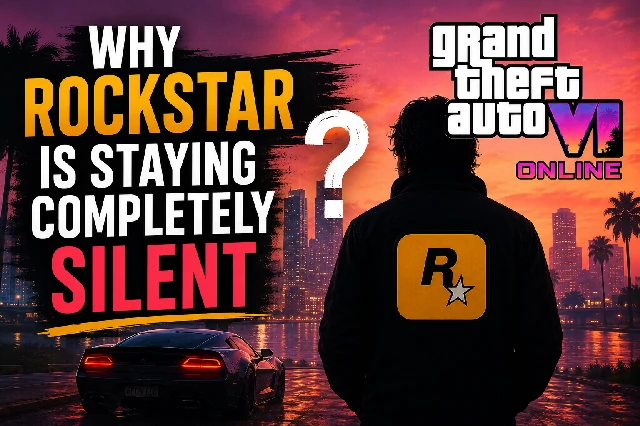
Rockstar is not talking about GTA Online 2.
They are not talking about it because they do not have to, but more importantly, because they cannot afford to mess up the messaging. GTA Online generated billions of dollars over a decade. It kept a PlayStation 3 and Xbox 360 era game relevant through three console generations. It funded single-player DLC that never happened, and it essentially became its own self-sustaining ecosystem. You would think the sequel to a money printer would come with a detailed roadmap of the next money printer. Instead, we get radio silence.
If you look at how Rockstar handles promotion, this approach makes total sense. They are famously insular. They operate on their own schedule, ignoring industry standards and traditional marketing cycles. When they finally do decide to pull back the curtain on the multiplayer side of GTA 6, the internet is going to stop spinning for a day. Until then, the lack of news tells a very specific story about how the studio is thinking about the future of virtual crime.
The Shadow of the Original GTA Online
To understand why Rockstar is hiding the ball, you have to look at what GTA Online actually became. In 2013, it was a messy, glitchy, bare-bones add-on that barely worked at launch. Servers crashed constantly. Money was hard to make legitimately. Players spent their time grinding the same rooftop mission over and over just to buy a basic apartment and a fast car. It took years of steady updates, from Heists to After Hours, to turn it into the sprawling playground of flying bikes, submarine missile bases, and corporate boardrooms that it is today.
That messy evolution is actually a double-edged sword for the developers. On one hand, it gave them a decade of live-service data. They learned what keeps players engaged, what drives shark card sales, and how to structure a continuous stream of content. On the other hand, it created a bloated monster. The current version of GTA Online is overstuffed with systems piled on top of systems. If you start playing it today as a fresh user, the sheer volume of phone calls, property management pop-ups, and game modes is genuinely overwhelming.
Rockstar knows they cannot just copy and paste that exact formula into a brand-new engine without a complete rethinking. If they announce a massive, feature-complete multiplayer suite right now, fans will expect all the content from the past ten years to magically transfer over on day one. That is a logistical and technical nightmare. By staying quiet, they avoid setting impossible expectations that the community will inevitably weaponize against them.
The Trailer Strategy and Single-Player Focus
Look closely at the promotional material we have received so far. It is heavily focused on Lucia, Jason, and the cinematic tone of the story. Rockstar wants you to view GTA 6 as a prestige entertainment product first and a multiplayer platform second. They want the narrative to carry the initial wave of excitement.
This is a deliberate return to form for a studio that made its name on sprawling, narrative-driven single-player epics. Red Dead Redemption 2 suffered a bit in the public discourse because its online component felt like an afterthought compared to the staggering achievement of Arthur Morgan's story. Rockstar wants to ensure that does not happen again. They need the world to care about Vice City and its surrounding swamps and keys as a living, breathing place before they turn it into a digital theme park for griefers and grinders.
If they started talking about property ownership, heist payouts, and daily bonuses right now, it would cheapen the artistic weight of the trailers. Gamers would immediately start speculating about microtransactions and currency economies instead of talking about the incredible physics engine and AI improvements. Rockstar is smart enough to separate the art from the service, at least in the pre-launch phase.
Technical Ambition and Next-Gen Constraints
Building a modern open-world game is brutally difficult. Building one that has to support both a stunning single-player campaign and a massive multiplayer ecosystem on current-generation hardware is even harder. The PlayStation 5 and Xbox Series X are impressive machines, but they still have limits. When you push the density of NPCs, the fidelity of the weather systems, and the complexity of the vehicle damage models to the absolute limit, you leave very little headroom for network replication.
When you play GTA Online right now, you can feel the strain of ten-year-old spaghetti code holding the whole thing together. Loading times can be rough, and netcode quirks are everywhere. For GTA 6, Rockstar is undoubtedly building a completely new networking infrastructure from the ground up. They have to account for crossplay, modern anti-cheat measures, and seamless transitions between freemode activities.
That kind of engineering takes time, and it is prone to massive pivots during development. If a developer promises a specific multiplayer feature two years before launch, and then the hardware simply cannot handle it without dropping frame rates into the teens, they are forced to cut it. That leads to broken promises and internet outrage. Silence is the ultimate shield against technical uncertainty.
Avoiding the Live-Service Fatigue
Gamers are exhausted. For the past five years, every major publisher has tried to shove a live-service game down our throats, and most of them have crashed and burned. Hero shooters, extraction shooters, and persistent online worlds fail left and right because players simply do not have the time to maintain three or four different digital second jobs.
Rockstar knows that announcing GTA Online 2 too early could trigger a wave of cynical fatigue. If they come out and start talking about daily challenges, battle passes, or recurring subscription models, the tone of the conversation changes instantly. People will stop talking about the magic of exploring a modern Florida parody and start complaining about monetization schemes.
By keeping the focus entirely offline for now, they let the goodwill of a traditional game release carry them forward. When the online mode eventually gets revealed, it will arrive as a separate conversation. It will not taint the purity of the initial launch window. That separation is vital for managing public relations in an era where gamers are deeply suspicious of corporate monetization.
The Economy Problem
One of the most delicate aspects of launching a new multiplayer game is the economy. Get it wrong at the start, and your players either burn through all your content in a week or get stuck behind an impossible paywall that forces them to reach for their credit cards.
In the original GTA Online, the economy broke completely within the first few months due to hacked lobbies and money glitches. Rockstar spent the next several years playing whack-a-mole with exploits while desperately trying to rebalance vehicle prices so that new players could actually compete with veterans who had billions in the bank. By the end of its run, a standard sports car cost more in-game than a military jet used to cost.
For the sequel, they have to design an economy that can survive for another decade without completely alienating newcomers. That requires serious economic modeling, player behavior forecasting, and restraint. If they start talking about how businesses and real estate will work in the new multiplayer, they invite intense scrutiny from day traders and armchair economists within the community. They are keeping those internal spreadsheets locked away in a high-security vault for a reason.
PC Port Delays and Platform Strategy
Another major factor in the silence is the release platform strategy. Rockstar has a very predictable playbook. They release the game on consoles first, let the massive install base buy it, iron out the worst of the bugs, and then a year or two later, they double-dip by releasing an upgraded version on PC.
GTA Online thrives on PC, but the PC version has always been plagued by hackers, modders, and stability issues due to the open nature of the platform. If they announce details about the multiplayer structure, they have to address how PC players will fit into the ecosystem. Will there be dedicated servers? Will crossplay be enabled between consoles and PC, or will Sony and Microsoft put up walls to keep console players safe from mod menus?
Avoiding these questions allows Rockstar to focus entirely on the console launch right now. They do not want to litigate the PC version in press releases years before it even exists. Keeping quiet keeps the messaging clean and concentrated on the hardware that matters most to their initial quarterly earnings reports.
What the Silence Actually Tells Us
If you read between the lines, Rockstar's lack of communication speaks volumes about their confidence. A panicked studio rushes out trailers, roadmap blog posts, and developer diaries to reassure shareholders and keep stock prices stable. A studio that knows they are sitting on the biggest entertainment product of the decade can afford to sit back, drink a cup of coffee, and let the internet tear apart a single screenshot of a sunset for six months.
They do not need to hype up the online mode right now because the brand practically sells itself. Every single person who bought a Shark Card in the past ten years is already planning to log into the new game on day one, regardless of what features are announced. Rockstar holds all the cards, and they know it.
When the time is right, probably six to nine months before the game hits store shelves, we will get a dedicated status report or a flashy gameplay trailer showing off the new multiplayer sandbox. Until then, we are going to get silence. It might be frustrating for people who live on gaming forums, but from a strategic standpoint, it is the smartest play they could possibly make.
Rockstar is letting the mystery do the heavy lifting. In an industry that constantly overshares every tiny detail of a game's development cycle from the moment it leaves the concept phase, that silence feels refreshing. It reminds us of a time when games arrived with an aura of surprise, waiting to be discovered by the players rather than spoiled by a marketing department three years in advance.