The Austin Vibe Shift
Drive down Congress Avenue on a Friday night and you can feel the current moving underneath the city. The neon signs hum, the food trucks sling brisket tacos to lines wrapping around corners, and somewhere in a cramped apartment above a vintage clothing store, four people are screaming at a cathode-ray television. They are not playing the most expensive video game ever made. They are huddled around a strange, chunky controller setup, testing a local roguelike about a raccoon trying to steal tax documents from the state capitol.
If you ask the people in that room why they have not preordered the latest multibillion dollar open world crime simulator, they will probably laugh. Then they will hand you a controller.
The mainstream games media treats every upcoming blockbuster like a national holiday. We spend months dissecting trailer footage frame by frame, arguing about ray tracing speeds and polygon counts as if the soul of the medium depends on photorealistic pores. But walk through the growing developer hubs in Texas, from the indie pockets of East Austin to the hidden studios tucked away in the warehouse districts of Houston and Dallas, and you find a completely different reality. Gamers here are exhausted. They are tired of waiting a decade for products that cost seventy dollars at launch and require another forty dollars in day-one patches just to run properly.
Texas has always marched to its own drumbeat. This is a state with a massive, fiercely loyal gaming population, yet it maintains a healthy skepticism toward coastal corporate mandates. When a monolithic publisher announces a game designed to suck up every spare hour of your life for the next five years, the reaction here is often a collective shrug. Local players are finding that the most exciting things happening in interactive entertainment are not coming from Los Angeles or Tokyo boardrooms. They are coming from Discord servers, itch.io pages, and tiny local showcases where developers sell their strange, unpolished masterpieces straight out of cardboard boxes.
This is not just about being contrarian. Texas gamers are uniquely positioned to see the cracks in the AAA foundation because the state plays host to both massive development powerhouses and a fiercely independent grassroots scene. We live right next door to the factories making the sausage, and many of us would rather eat at the independent smokehouse down the road.
The Fatigue of the Endless Map
Size used to be everything. Publishers spent the entire previous console generation bragging about square mileage, promising maps bigger than real countries and campaigns that took two hundred hours to finish. We ate it up for a while. There is an undeniable thrill in cresting a digital hill and seeing a horizon stretching out for miles, knowing you can walk to any point in the distance.
The honeymoon phase ended a long time ago.
Modern blockbusters suffer from a terrible affliction known as checklist design. You boot up a massive open world game and your screen instantly erupts in icons. You have towers to climb, radio masts to hack, bandit camps to clear, and feathers to collect. It starts as an adventure and slowly morphs into an unpaid data entry job. You spend forty minutes riding a digitally simulated horse across an empty landscape just to trigger a cutscene that sets up the next forty minutes of riding a horse.
Independent games reject this philosophy entirely. When you boot up a fresh indie release, you usually encounter a developer who respects your time. They understand that most adults have maybe an hour or two at the end of the day to unwind. They do not want to spend that hour navigating inventory menus and listening to generic exposition while characters walk at a slightly slower pace than your running speed.
Talk to players in the Dallas Fort Worth metroplex and you will hear a common refrain. They want games that get straight to the point. They want mechanics that click instantly, stories that do not take twenty hours to get good, and art styles that have personality rather than just chasing higher fidelity. While the internet loses its collective mind over leaked screenshots of high budget sequels, local players are diving deep into vertical slice demos of deckbuilders, survival horror throwbacks with PS1 graphics, and weird narrative experiments that make you question your own life choices.
There is also the matter of tone. Blockbusters made by committees of hundreds of people tend to smooth off all their interesting edges. They are market tested to appeal to everyone, which usually means they end up appealing deeply to no one. They lean on cynical antiheroes, gritty violence, and tired tropes about revenge and family. Indies do not have to answer to shareholders who are terrified of losing a percentage point of profit in the European market. They can be tender, funny, surreal, or genuinely disturbing. They can take risks that would give a chief financial officer an immediate panic attack.
The Local Scene Speaks Out
To understand why local players are looking elsewhere, you have to look at the community spaces where real gaming culture thrives in the state. Go to a monthly meetup hosted by the Austin Game Devs or check out a weekend jam at a local brewery in San Antonio. The energy in these rooms is electric. People are bringing laptops with unfinished builds, letting strangers play their games, taking notes on sticky pads, and sharing local craft beers.
I sat down with Marcus, a thirty-two-year-old sound designer who has lived in Austin for a decade. He has a beard that looks like it has survived a camping trip and a laugh that echoes off the brick walls of the bar.
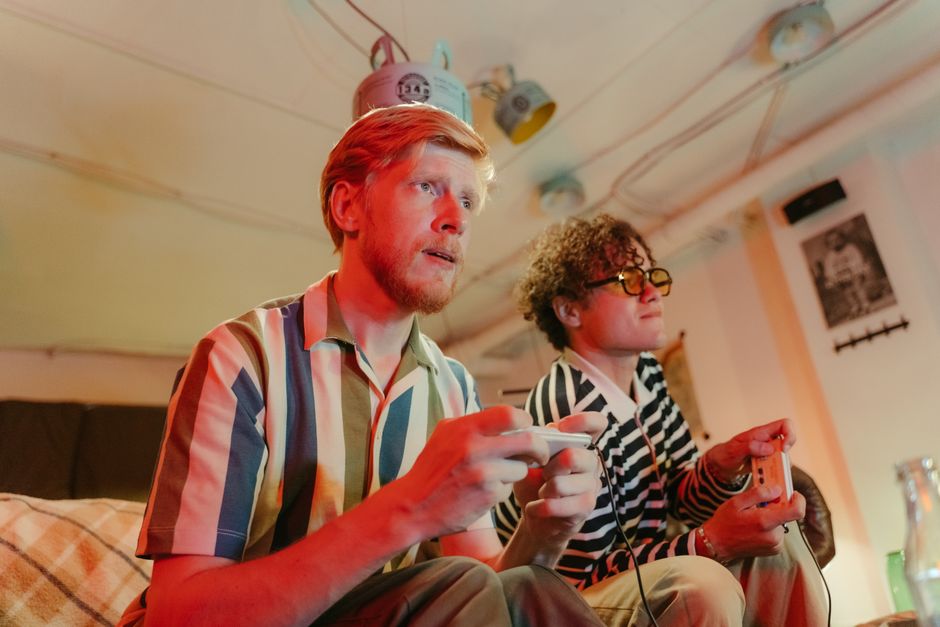
"Everyone online acts like GTA is the only game coming out," Marcus told me, gesturing with a half-empty pint glass. "Like we are all just sitting around waiting for permission to have fun. But look around. Nobody here is talking about it. My friends and I were just playing a weird local co-op game about two ghosts trying to ruin a wedding. It took the developer six months to make in his garage, and we have had more fun with it this week than we did with the last three major console releases combined."
This sentiment is echoed across the state. In Houston, the arcade bar scene has evolved past just housing classic cabinets from the eighties and nineties. Venues now regularly host indie showcase nights where local developers can plug their laptops into the house sound system and let patrons test out strange experimental titles. You see people crowded around a single monitor, cheering when someone pulls off an impossible jump or laughing at absurd physics glitches.
This is what gaming used to feel like before it became a trillion dollar entertainment beast. It feels communal, human, and slightly chaotic. When you play a massive corporate game, you are a consumer sitting alone in a dark room staring at a product. When you engage with the indie scene, especially in a state with such a vibrant local arts culture, you feel like part of a conversation.
The economics play a massive role here too. Texas has experienced incredible economic shifts over the past few years, with the cost of living rising sharply in cities like Austin and Dallas. When rent goes up and grocery bills climb, shelling out seventy-plus dollars for a single piece of software starts to feel like a luxury purchase that requires serious contemplation. Consumers are becoming much more deliberate with their spending. An indie game that costs fifteen dollars and delivers a tight, unforgettable ten-hour experience often feels like a much smarter investment than a sprawling epic that demands a massive time and financial commitment upfront.
The Art of the Creative Risk
Let us talk about mechanical stagnation for a moment. If you played a major open world action game in 2013, you essentially know how to play every major open world action game coming out today. The loop is depressingly familiar. You use third-person perspective to sneak up behind an enemy, press one button for a stealth takedown, use eagle vision to highlight items in the environment, and climb a yellow-painted ledge to reach the next objective.
The industry has codified fun into a sterile science. Innovation is treated as a financial risk, so publishers stick to formulas that have proven track records. Why try something new when you can iterate on a proven template and guarantee ten million preorders?
Indie developers do not have the luxury of playing it safe, and that desperation breeds pure genius. Because they cannot compete with massive studios on graphical fidelity or motion capture budgets, they have to innovate somewhere else. They compete on game design, on weird narrative structures, and on mechanics that defy easy categorization.
Take the current wave of tactical roguelikes or surreal simulation games coming out of small-team outfits. You see developers blending genres that have no business being together, like combining fishing mechanics with psychological horror or turning spreadsheet management into a high-stakes cyberpunk thriller. These games do not care about photorealism because their art style is baked directly into their mechanics. A game rendered in chunky pixel art or minimalist vector graphics often communicates its tone more effectively than a multi-million-dollar engine rendering individual blades of grass.
Texas gamers are noticing this shift. The state has a long history of independent artistry, from regional music movements to outsider art installations like the ones scattered across the Hill Country. There is a deep-seated appreciation for things that are rough around the edges, things that feel like they were made by a human being with a specific vision rather than a corporate focus group.
When a local player skips a massive blockbuster in favor of a zero-budget indie title about a guy navigating a mundane office job in the afterlife, they are making a statement. They are voting with their wallets. They are saying that they value creativity over polish, heart over budget, and surprise over familiarity.
The Hardware Reality Check
There is also a very practical, almost unglamorous reason why indie games are winning over local crowds. Have you looked at the system requirements for modern blockbusters lately?
To play the biggest upcoming games at their intended settings, you practically need to hook your PC up to a local nuclear power plant. The graphics card shortage might have stabilized compared to a few years ago, but the sheer cost of keeping gaming hardware up to date has skyrocketed. Consoles are not much better, with mid-generation hardware refreshes pushing prices well past the psychological comfort zone for many average households.
Mainstream publishers seem entirely unbothered by this. They design their games assuming everyone has the absolute latest high-end rig or current-gen console, pushing optimization down the priority list until patch day arrives months later.
Indie games do not have this exclusionary barrier to entry. A well-optimized indie release can usually run on a toaster, a five-year-old laptop, or a handheld device you bought on sale. This democratization of access resonates strongly in a diverse state like Texas, where gaming communities span every economic background. You do not need a three-thousand-dollar setup to enjoy the best the indie scene has to offer. You just need curiosity and a screen.
This hardware flexibility has fueled the massive explosion of handheld PC gaming across the state. Whether people are riding the light rail in Houston, sitting in a coffee shop in Denton, or waiting out a delayed flight at DFW airport, they are pulling out portable gaming devices. And what are they playing on those devices? Rarely are they trying to stream a massive, two-hundred-gigabyte open world game that drains their battery in twenty minutes and stutters every time the camera pans too fast. They are playing tightly packaged indie games that load instantly and run at a buttery-smooth frame rate.
The culture around hardware has changed. Instead of measuring your worth as a gamer by how many teraflops your machine can push, the badge of honor now is how many obscure, brilliant little titles you have uncovered and recommended to your friends.
Digital Community Versus Corporate Hype
The marketing machine behind a major blockbuster is an absolute beast. Months before a game launches, the internet gets flooded with sponsored streams, exclusive preview events for creators, glossy cinematic trailers, and endless discourse on social media platforms. It feels less like an artistic release and more like the launch of a new superhero movie or a major consumer electronics product.
For a lot of gamers, this manufactured hype cycle has the opposite of its intended effect. It triggers a deep sense of fatigue. By the time the game actually hits store shelves, you feel like you have already played through half of it via YouTube breakdowns and marketing beats. The mystery is entirely gone.
Indie games operate on a completely different frequency. Discovery is often organic and word-of-mouth. You might find out about a brilliant new narrative adventure because a developer you follow on social media posted a clumsy twenty-second clip of a funny bug they fixed. You might stumble across a masterpiece on an obscure forum board where a handful of passionate fans are translating a cult classic from another country.
This creates a sense of ownership and intimacy that corporate marketing can never replicate. When you find an indie game that speaks to you, you feel like an archaeologist who just brushed the dirt off a hidden artifact. You want to tell people about it. You want to share keys with your friends, write long steam reviews explaining why the soundtrack deserves an award, and jump into fan wikis to help piece together the lore.
In Texas, where independence and community are deeply embedded in the cultural DNA, this grassroots approach to gaming culture feels natural. We are a state that loves local music venues over massive stadium tours, independent restaurants over chain franchises, and backyard barbecues over catered corporate galas. Why should our gaming habits be any different?
The shift away from massive blockbusters is not a temporary phase or a loud internet protest that will fizzle out by next week. It is a fundamental realignment of what people want out of their hobby. Gamers are realizing that bigger does not mean better, that higher budgets rarely translate to deeper emotional resonance, and that some of the most innovative work in the medium is happening far away from the spotlight of major trade shows and corporate earnings calls.
Looking Beyond the Horizon
The industry will keep churning out its multi-year, multi-billion-dollar sequels, and millions of people will still line up to buy them. That machine is too big to stop overnight. But the cultural center of gravity is drifting away from those monoliths. It is moving toward the margins, toward the small teams taking big chances in spare bedrooms and small offices.
If you want to know where gaming is actually heading, do not look at the marketing budgets of the biggest publishers in the world. Look at the local showcases, the independent game jams, and the digital storefronts where unknown developers are putting their entire hearts into projects nobody expects to succeed. That is where the real life of the medium is hiding.

Texas gamers figured this out a while ago. While the rest of the industry holds its breath for the next corporate titan to arrive, local players are already deep into the next great underground obsession, laughing, sharing controllers, and building a community that no executive boardroom can ever replicate.
The Physics of Failure and the Joy of Losing
Talk to a developer working on a twenty-person indie team in an unmarked office park off the Austin loop and you will hear a dirty word that mainstream publishers banned years ago. That word is friction.
Modern AAA design works overtime to remove any possible moment of frustration or confusion from the player experience. If a puzzle takes more than ten seconds to solve, a companion character immediately yells out the exact solution. If you fall off a cliff, the game gently places you back on solid ground half a second before your boots hit the water, sparing you the indignity of a loading screen or a proper death penalty. The industry decided that dying is bad for retention. If a player gets stuck, they might turn the game off, and a turned-off console generates zero engagement metrics.
Independent games laugh in the face of frictionless design. They embrace brutal difficulty, obtuse inventory systems, and bizarre rule sets that take hours of trial and error to decode.
Think about the roguelike phenomenon that has taken over living rooms from El Paso to Beaumont. These games are built entirely around failure. You dive into a dungeon, you make a terrible tactical error on floor three, and you die instantly. The screen flashes red. The music cuts out. You are dumped right back at the very beginning with nothing to show for your twenty-minute run except a vague understanding of a trap you will never fall for again.
Mainstream focus groups would riot over that kind of loop. Yet local players eat it up. There is a strange, shared psychology in mastering a system that actively wants to crush you. When you finally beat a boss that has handed you your digital walking papers fifty times in a row, the victory feels earned. It belongs to you. No accessibility slider or difficulty setting can rob you of that satisfaction because the game treated you like an adult who could handle a challenge.
This philosophy bleeds into how communities interact outside the game itself. When a massive open world title comes out, the conversation online is entirely about spoilers, optimal builds, and finding the single best weapon so you can trivialize the rest of the game. When an uncompromising indie masterpiece drops, the conversation sounds more like a support group. Players trade war stories about bizarre deaths, argue passionately about hidden lore crumbs, and compare notes on mechanics the developer never bothered to explain in a tutorial. Failure becomes a social currency.
The Sound of the Underground
We rarely talk about audio design in mainstream games unless it is to praise a sweeping orchestral score recorded by a sixty-piece symphony in London. Big budgets buy big brass and soaring string sections designed to tell you exactly how to feel during every cinematic moment. If a dragon flies overhead, the bass thumps your floorboards so hard you check your foundation for cracks.
Step away from the blockbuster machine and the sonic landscape gets weird, messy, and infinitely more interesting.
Independent developers rely on lo-fi audio choices, chiptune soundscapes, and abrasive noise experiments that would give a Sony quality assurance tester a migraine. They use cheap synthesizers, distorted vocal samples, and environmental sound design recorded with a smartphone microphone in a noisy kitchen.
I visited a small recording setup in East Austin last month where a composer named Elena was working on the soundscape for a psychological horror game about an abandoned motel in West Texas. She was not using expensive sample libraries. Instead, she was dragging a rusty wrench across an old radiator, recording the metal screech, and pitching it down four octaves until it sounded like something crawling out of a dry well.
"Big studios want everything to sound clean and expensive," Elena told me, leaning over her audio workstation with a cup of lukewarm black coffee. "They want movie sound. But movie sound is boring when you are holding a plastic controller in your bedroom. I want the audio to make your teeth itch. I want it to feel like the game was recorded in a basement that smells like damp carpet."
That rough-hewn aesthetic extends to every corner of indie production. Visuals do not need to push hardware to its absolute limit to leave an impression. A striking hand-drawn art style, a limited color palette of four harsh neon shades, or jittery low-poly models can communicate dread, joy, or melancholy far more effectively than a thousand man-hours of digital hair physics. Gamers are developing a collective fatigue toward hyper-realism because photorealism ages poorly. A game striving for absolute visual fidelity in 2018 looks quaint today. A game built on a distinct, stylized artistic vision looks just as striking ten years later.
The Geography of Inspiration
Location matters in art. You can tell a lot about where something was made by paying attention to the textures and rhythms of the world.
For decades, the dominant video game geographies were strictly coastal. Games were written by people living in Seattle high-rises, Los Angeles suburban offices, or Montreal design lofts. The resulting worlds reflected those environments. They leaned heavily toward moody Pacific Northwest rain, cynical Hollywood grit, or sterile corporate tech optimism.
Texas brings a completely different cultural geography to the table, and it is finally bleeding into the local indie scene.
Drive an hour outside any major Texas city and the landscape flattens out into caliche dirt, endless scrub brush, rusted oil derricks, and wide, unforgiving skies that make you feel tiny. That specific kind of isolation, combined with the blistering heat and the sprawling, highway-dominated infrastructure of the state, breeds a very particular brand of weirdness.
Look at the games coming out of regional jams and small studios across the state right now. You see titles inspired by the humid Gothic horror of East Texas piney woods. You see surreal driving simulators that capture the hypnotic, brain-melting monotony of a four-hour stretch down Interstate 10 at midnight. You see weird, satirical management sims about the absurdities of local real estate markets and tech bro culture invading historic neighborhoods.
These games could not have been made in San Francisco or Tokyo. They carry the dust, the sun, and the distinct cultural friction of living in a rapidly changing southern state where the old weird Texas rubs shoulders with the new corporate gold rush.
Mainstream publishers are terrified of regional specificity. They want their settings to be generic enough to appeal to a gamer in Seoul, Berlin, and Chicago all at once. They sand down all the local cultural corners until the game world feels like an airport terminal. It is clean, functional, and utterly devoid of a soul.
Indies lean hard into their local weirdness. They write dialogue that actually sounds like how people talk in the neighborhoods where the developers buy their groceries. They set their stories in strip malls, abandoned warehouses, and sweltering front porches. That authenticity acts like a beacon for players who are sick of visiting the same generic post-apocalyptic ruins for the fifth console generation in a row.
The Archivists of the Medium
There is another, quieter movement happening parallel to the indie boom. It is driven by preservationists, modders, and hardware tinkerers who are refusing to let gaming history rot away in corporate vaults.
Major publishers have a notoriously terrible relationship with their own back catalogues. When licensing deals expire or online servers cost more to maintain than they bring in, corporations simply pull the plug. Entire multiplayer communities vanish overnight. Digital storefronts close, rendering legally purchased games completely inaccessible unless you know how to navigate the murky waters of digital piracy or hardware modification.
Here in Texas, where a healthy streak of independent self-reliance runs deep, people are taking preservation into their own hands.
Check out the back rooms of local retro game shops in San Antonio or independent maker spaces in Fort Worth. You will find enthusiasts stripping down ancient circuit boards, replacing leaky capacitors in original hardware, and reverse-engineering forgotten code from arcade cabinets that haven't worked since the Clinton administration. These folks are not just nostalgic hoarders. They are acting as the actual librarians of a medium that has always been far too eager to throw away its own past in pursuit of the next shiny object.
This grassroots preservation mindset influences how local players view modern games as well. When you realize that a multibillion-dollar publisher can legally revoke your access to a game you paid for because a server contract expired, your relationship with digital consumption changes. You start valuing ownership. You look for indie titles that ship as a complete, DRM-free package on a platform like itch.io, where you can download the installer file, save it to a thumb drive, and know with absolute certainty that you will be able to play that game twenty years from now even if the internet ceases to exist.
Corporate giants want everything locked inside a subscription service. They want you renting access to a rotating library of content, paying a monthly fee forever, owning nothing, and feeling happy about it. The independent scene pushes back against that future simply by existing as a collection of discrete, ownable artifacts.
The Unwritten Future
The cultural shift happening across Texas and the broader gaming landscape is not a revolution with a manifesto or a unified leadership. It is much more powerful than that. It is a quiet, stubborn preference for things that feel real over things that feel manufactured.
Every time a player deletes a hundred-gigabyte live-service monster from their hard drive to make room for a two-hundred-megabyte puzzle game made by two friends in a garage, a small signal gets sent up the corporate ladder. Every time a local indie showcase sells out a smoky brewery back room on a Tuesday night, proof accumulates that the audience wants something more nourishing than what the global blockbusters are serving.
The industry will keep spinning its massive wheels. Trailers will drop with cinematic flair. Preorder bonuses will promise the moon. Millions of people will continue to bite on the hype because the marketing engine is simply too loud to ignore completely.
Let them buy the hype.
Back in that cramped apartment above Congress Avenue, the cathode-ray tube is still humming in the dark. The raccoon has finally stolen the tax documents. Four tired adults are arguing over who messed up the stealth route, laughing until their ribs hurt, and pouring another round of local beer. No executive in a coastal boardroom can package that feeling, and no seventy-dollar patch can fix what makes it work. It is messy, it is local, and it is the only part of modern gaming that still feels alive.