The Post Launch Reality for the Zone
Every major release lives or dies by its support window these days. Fans finish the main campaign, pick the bones clean, and immediately start asking what is next. When GSC Game World mapped out the future for STALKER 2 Heart of Chornobyl, they knew they could not just drop standard gun packs and call it a day. The Zone demands more than that. It demands atmosphere and weirdness. The first expansion was always going to lean into what players expect from the franchise. Dark corridors, mutant hunting, and faction politics form the bedrock of that initial content drop.
What comes after that first wave is where things get genuinely interesting. Developers often use early expansions to secure the core audience by giving them more of the hits. Once that box is checked, the studio finally gets room to breathe and experiment. Rumors and early roadmap details point toward a massive pivot for the second expansion. Instead of sticking strictly to the gritty survivalist playbook that defined the franchise since two thousand and seven, the team is apparently steering hard into experimental territory.
We have seen this happen with other atmospheric heavyweights. When a game has a world this rich and oppressive, locking it into standard mission structures feels like a waste. The Zone is practically begging for stranger storytelling. Players spend dozens of hours learning the rules of anomalies and artifact hunting. The second DLC seems designed to break those rules entirely. If the leaks and early design docs hold true, we are looking at a shift that will divide the community in the best possible way. People will either love the ambition or complain that it strays too far from the original trilogy. That is usually a sign that a developer is actually taking creative risks.
Breaking the Mold of Survival Shooters
Survival shooters suffer from a predictable loop. You manage your inventory, you clean your weapons, you scavenge for canned meat, and you shoot mutants in the dark. It works because the tension is real. STALKER 2 nails that tension better than almost anything else on the market. Yet, repeating that exact same loop across multiple expansions gets exhausting. The second DLC appears to recognize this fatigue and throws out the rulebook.
Instead of focusing purely on resource scarcity and tactical gunfights, narrative design documents hint at psychological horror elements and reality-bending anomalies. Think less about counting bullets and more about questioning what you are even looking at on your screen. The original games flirted with this through the brain scorcher and hallucinations, but this expansion reportedly turns that dial all the way up. You are dealing with spaces that do not make physical sense. Time dilation, spatial loops, and localized memory loss become your primary antagonists.
This approach changes the gear meta entirely. High-tier rifles and armor plating will not save you if the environment itself is your enemy. GSC Game World has a history of leaning into Ukrainian folklore and weird science. Combining those influences with next-generation rendering technology opens up possibilities that older hardware simply could not handle. We are talking about visual distortions and audio design that actively mess with player intuition. It is a bold move for a franchise built on hard-nosed realism. When you strip away a player's reliance on their map and their compass, you force them to engage with the world on a completely different level.
Faction Dynamics and the New Threat
Factions form the lifeblood of the Zone. Duty wants order, Freedom wants anarchy, and various smaller groups just want to survive or get rich off stolen tech. The second DLC introduces a wildcard faction that does not fit into the classic ideological boxes. These are not just another group of guys in camo with upgraded assault rifles. They operate on principles that defy standard human logic, possibly tied directly to the deepest secrets of the Chornobyl Nuclear Power Plant.
Interacting with this new faction requires a shift in how you play the game. Standard trade and reputation systems will not work out of the box. You have to learn their language, which is less about spoken words and more about environmental cues and artifact placement. This design philosophy reminds me of classic immersive sims where talking to an NPC is a puzzle in itself. If you manage to get on their good side, you gain access to gear that completely alters traversal. If you piss them off, they do not just send hit squads after you. They manipulate the very anomalies in your path to trap you.
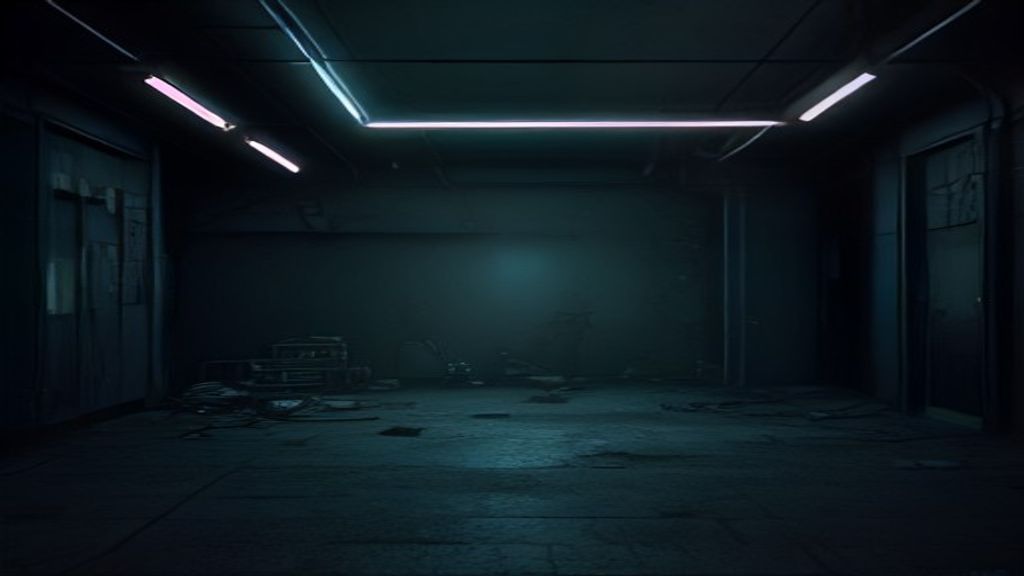
The introduction of this faction also forces existing groups to react. Duty and Freedom might actually have to put aside their endless bickering to deal with a threat that ignores the rules of the Zone entirely. This creates dynamic shifts in outposts and safe zones across the map. You might walk into a familiar bar and find everyone acting strangely, or notice that a major trade route has vanished overnight because the landscape itself rearranged while you were sleeping. It brings a sense of unpredictability back to a map that players will know inside and out by the time this expansion drops.
Technical Ambition on Unreal Engine 5
Building weird, reality-bending spaces is one thing on paper, but making it run smoothly on modern hardware is a massive technical hurdle. STALKER 2 already pushes Unreal Engine 5 hard with its massive open world, dynamic weather systems, and advanced AI life simulation. The second DLC reportedly relies even heavier on engine-level modifications to pull off its spatial anomalies.
We are talking about seamless transitions between distinct reality layers without traditional loading screens. When an anomaly triggers, the game needs to instantly alter geometry, lighting, and audio parameters on the fly. Doing this in a static corridor shooter is easy enough. Doing it in a sprawling open world where mutant packs and rival stalkers are running real-time simulation logic is a nightmare for programmers. GSC Game World has expanded significantly since the early days of development, bringing in veteran talent who know how to squeeze every ounce of performance out of current generation consoles and high-end PCs.
The lighting model alone will take a heavy toll. Shifting from a natural daylight cycle into an artificial, oppressive dreamscape requires dynamic global illumination that can handle extreme color grading and shadow manipulation without tanking frame rates. Audio is another crucial piece of the puzzle. Spatial audio design in STALKER has always been top tier, but this expansion relies on sound cues that trick your brain into thinking something is behind you when it is actually three rooms away in a completely different spatial dimension. If they pull it off technically, it will set a new benchmark for how developers use game engines to tell psychological stories rather than just rendering pretty forests.
How the Community is Reacting
Whenever a studio takes a beloved franchise in a strange new direction, the fanbase immediately splits into warring factions of their own. Reddit threads and Discord channels are already full of speculation and preemptive worry. Some veterans argue that STALKER should stick strictly to gritty survivalism and leave the cosmic horror to games like Control or Alan Wake. They want mud, blood, rusted AKs, and radiation sickness. Anything else feels like a betrayal of the original vision.
On the other side of the fence, a vocal group of players is thrilled to see the developers taking big swings. The Zone was always a place of supernatural anomalies and unexplained phenomena. Leaning into that weirdness instead of playing it safe with standard shooter tropes is exactly what keeps a franchise from going stale. People remember moments from the original games where everything went sideways and the rules stopped applying. Chasing that specific high is the main reason anyone comes back to this world.
GSC Game World has earned a massive amount of goodwill simply by surviving against impossible odds and delivering a massive sequel. That goodwill buys them some runway to experiment. Even the skeptics will likely pick up the expansion out of sheer curiosity. The real test will be execution. If the reality-bending mechanics feel like annoying gimmicks that interrupt the core gameplay loop, the backlash will be swift. If those mechanics integrate smoothly into the survival loop and elevate the tension, it could easily become the most memorable piece of content the studio has ever produced.
Looking Past the Horizon
The lifespan of a modern single-player game depends heavily on how well its expansions justify their existence. Too many studio add-ons feel like deleted scenes hastily stitched back together to pad out a season pass. They offer more of the same enemies, slightly bigger guns, and a forgettable side story that does not move the needle.
STALKER 2 is positioning its second DLC to be the exact opposite of that tired formula. By treating the expansion as an opportunity to break its own rules and push Unreal Engine 5 into genuinely weird territory, GSC Game World is showing a level of creative confidence that is rare in the triple-A space today. They could have played it safe with a standard military campaign add-on and kept everyone moderately happy. Instead, they are rolling the dice on psychological horror and spatial anomalies.
Whether this gamble pays off completely remains to be seen. Game development is messy, and ambitious concepts often get scaled back when reality hits production schedules. Even if half of these rumored features make it into the final release, the resulting experience will be unlike anything else currently scheduled for the survival shooter genre. For now, all we can do is watch the horizon, check our filters, and wait to see what crawls out of the altered Zone.
The Legacy of Modding and the Shift in Official Content
PC gaming has always owed a massive debt to the modding community, and STALKER stands as one of the best examples of that relationship. For over a decade, fans kept the original trilogy alive by building massive overhaul projects. Mods introduced new storylines, restructured the economy, and added entirely new survival mechanics. Some of those fan projects even experimented with cosmic horror and surrealist nightmare dimensions long before GSC Game World started drafting plans for this second expansion.
When a developer looks at what the modding community has accomplished, they face a unique challenge. Fans have already built almost every conceivable variation of the standard survival formula. You can download texture overhauls, hardcore survival difficulty tweaks, and custom quest lines that rival official releases. Because of this, official expansions cannot simply rely on offering more content of the same variety. They have to offer something that modders cannot easily replicate using existing assets and script hooks.
Deep engine-level alterations fall squarely into that category. A modder can rearrange spawn tables, rewrite dialogue files, and stitch together new maps using existing geometry. They cannot easily rewrite the core rendering pipeline of Unreal Engine 5 to handle real-time spatial folding and dynamic reality shifts without hitting severe technical roadblocks. By focusing the second DLC on these heavy programmatic changes, GSC Game World is carving out a space that official expansions should occupy. They are doing the heavy lifting that requires source code access and dedicated engineering teams. This separation ensures that the official content feels distinct from the best fan-made projects, giving players a compelling reason to return even if their hard drives are already packed with community-made overhauls.
Sound Design as a Weapon
Horror games live and die by their audio. When you strip away visibility in a dark forest or an abandoned industrial complex, your ears become your primary survival tool. The first STALKER games understood this implicitly, filling the air with the clicking of Geiger counters, distant mutant screeches, and the eerie metallic groans of the Zone settling under invisible pressure. Yet, standard sound design follows predictable acoustic rules. Sound travels from a source to your ears, bouncing off hard surfaces and fading over distance.
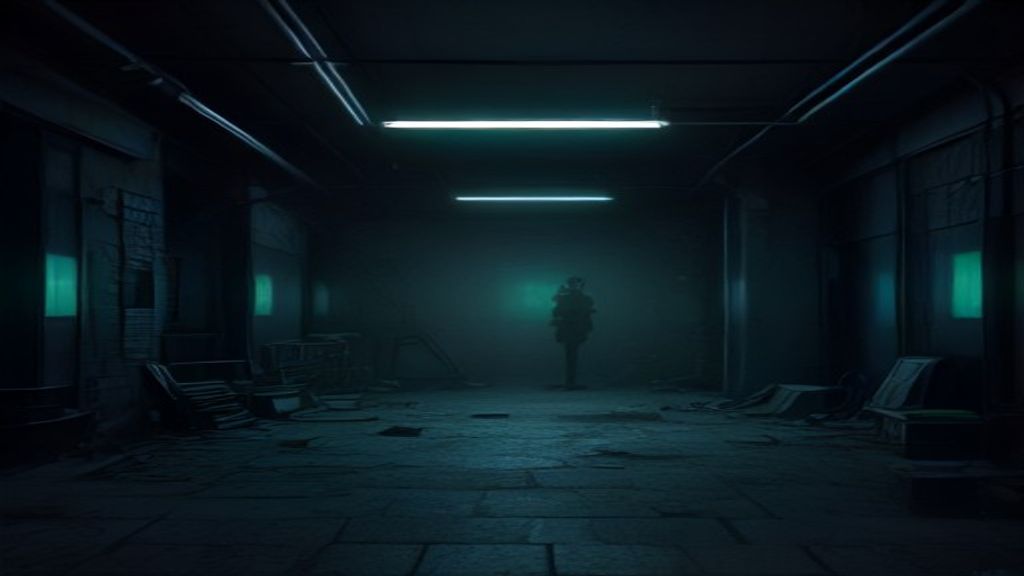
The second expansion throws those acoustic rules out the window. Audio files from early production builds hint at a system where sound travels across different spatial layers simultaneously. You might hear the footsteps of an approaching stalker coming from your left, but the actual entity is echoing from a completely different dimensional plane that you cannot currently see or reach. This creates a deeply unsettling psychological pressure. Your brain relies on spatial audio cues to build a mental map of your surroundings. When those cues start lying to you, panic sets in immediately.
Engineers are reportedly utilizing advanced binaural processing alongside custom reverb zones to achieve this effect. Instead of just lowering the volume of distant sounds, the game engine processes audio through algorithmic filters that simulate distortion and time delays. A gunshot might echo with a three-second delay because the sound wave had to travel through a pinched point in local space. These subtle details might go unnoticed consciously, but they trigger a primal sense of wrongness in the player. It turns the audio landscape into an active participant in the horror, making safe rooms feel fragile when the walls themselves seem to whisper from somewhere else entirely.
Balancing Accessibility and Hardcore Survival
One of the trickiest tightropes for a modern survival game is managing difficulty. If a game is too punishing, casual players bounce off within the first hour and never touch the expansions. If it is too forgiving, the hardcore fanbase complains that the developers have ruined the core identity of the franchise. STALKER built its reputation on unforgiving mechanics where a single stray bullet could end a multi-hour expedition. Finding food, treating radiation sickness, and maintaining your gear formed a relentless loop that demanded respect.
Introducing reality-bending anomalies and psychological horror into this mix creates a fresh balancing problem. If spatial puzzles and mind-melting anomalies require precise timing and abstract problem-solving, it might clash with the slow, methodical pace of traditional gunfights. GSC Game World has to ensure that players do not feel cheated by mechanics they could not possibly anticipate. In a normal firefight, you see the enemy, you take cover, and you return fire. In a reality-warped space, the floor might suddenly become the ceiling, or a hallway might loop infinitely until you figure out the specific environmental trigger to break the cycle.
Solving this without frustrating the player base requires careful telegraphing. The best puzzle design in games teaches the player the rules of a strange new system through subtle cues before putting them in a high-stakes scenario. Early encounters with the new faction and their territory will likely act as a tutorial space. Players will experience minor perceptual shifts in controlled environments where failure only means a mild health penalty rather than instant death. Once those rules are established, the game can ramp up the intensity and drop players into full-scale surrealist nightmares where every second counts. Getting that pacing right separates a brilliant atmospheric triumph from an annoying exercise in trial and error.
The Economy of the Abnormal
In any proper survival game, currency and resources dictate your progression. You clear out a bandit camp, loot everything that isn't nailed down, lug it back to a trader, and spend your rubles on better armor, sturdier guns, and medical supplies. This loop provides a satisfying sense of accumulation. You start out as a frightened rookie with a rusted pistol and end up as a walking tank armed with heavily modified assault rifles and tactical gear.
What happens to that economy when the laws of physics start breaking down? The second expansion introduces high-tier anomalies and materials that defy standard material science. These are not your typical radioactive bolts or glowing green rocks that you stuff into a lead-lined container. These are spatial anomalies frozen in solid form, echoes of past events trapped in amber, and biological samples from entities that do not exist on any known taxonomic charts.
Traders at the major outposts will not know what to make of these items at first. This creates a dynamic where standard currency temporarily loses its value, forcing a barter system based on specialized knowledge and rare informational assets. Instead of buying a better scope for your rifle, you might trade a stabilized spatial loop to a rogue scientist in exchange for safe passage through a restricted sector. This shifts the motivation away from simple material wealth. You are no longer hoarding rubles to buy the biggest gun. You are collecting esoteric knowledge and reality-warped artifacts simply to survive the next five minutes. It breathes new life into the late-game experience, preventing the common RPG pitfall where players become so wealthy and powerful that the world ceases to be threatening.
Level Design in Non-Euclidean Spaces
Traditional level design relies on physical geometry. A room is a box, a hallway connects two points in a straight line, and maps maintain a consistent physical scale. Designing spaces that break these rules requires a massive shift in how developers build virtual environments. When an open world game starts altering its own geometry on the fly, every asset and collision mesh has to account for multiple topological states.
The second DLC reportedly features locations where distance and direction lose all meaning. You might walk down a seemingly endless corridor, turn around, and find yourself back at the starting point, except the lighting has changed and the walls are now covered in organic growths. Building these spaces without breaking the game engine or causing severe motion sickness in players is a monumental task for the level design team. They cannot rely on standard prefab assets. Every single room in these altered zones has to be custom-built to handle dynamic scaling and perspective shifts.
This level design philosophy draws inspiration from classic psychological thrillers and surrealist art, but translating that into a first-person interactive space is notoriously difficult. If the player gets turned around and has no visual anchors, frustration replaces fear. GSC Game World is reportedly using environmental lighting, distinct audio reverberations, and fixed architectural landmarks that persist even when the space around them distorts. These anchors give the player a subtle thread to follow, ensuring they feel lost and disoriented without ever feeling like they are trapped in a broken, unwinnable state. It is a masterclass in controlled chaos, proving that even when physics break down, good design principles must hold firm.
The Evolution of Artificial Intelligence
Enemies in shooter games often feel predictable because they operate on fixed pathfinding grids and basic line-of-sight checks. You flank them, they take cover, and they toss a grenade. STALKER elevated this standard with its A-Life system, a background simulation that keeps mutant packs and rival faction members moving, hunting, and fighting across the map even when the player is miles away. It made the world feel alive and unpredictable.
Pushing that artificial intelligence into reality-bending environments requires a whole new tier of programming. How does a rival stalker react when gravity inverts? How does a mutant pack hunt you across a space that loops back on itself infinitely? If the enemies are just as disoriented by the spatial anomalies as the player, it could lead to hilarious pathfinding bugs where mutants run into walls or float helplessly in reverse gravity pockets. To prevent this, the developers have apparently given the new faction and high-tier mutants unique navigational rules that allow them to exploit the distorted geometry.
These enemies do not just survive the warped physics. They use them as a weapon against you. A member of the new faction might step through a spatial tear to flank you from a direction that physically should not exist based on the room layout. Mutants might phase through walls by riding localized time distortions, appearing behind your cover before you even hear them coming. This forces the player to stop relying on traditional tactical positioning. You cannot hold a corner or choke point when the enemy can rewrite the geometry of the room to bypass your defenses entirely. It keeps combat fresh and deeply unsettling, ensuring that even veteran players who know every trick in the book will find themselves completely outmatched.
Narrative Ambiguity and Environmental Storytelling
Modern video game writing often suffers from over-explanation. Characters spend hours monologuing about their motivations, audiologs spell out every plot twist in exhaustive detail, and quest logs track your moral alignment with annoying precision. This hand-holding ruins the mystery of discovery. STALKER has always excelled at environmental storytelling, letting the rusted machinery, skeletal remains, and cryptic graffiti tell the real stories of the people who died trying to conquer the Zone.
The second expansion takes this minimalist narrative approach and dials it up to match its surrealist setting. Instead of giving you a traditional quest giver who explains the exact history of the reality-bending anomalies, the game feeds you bits of lore through fragmented journals, audio distortion loops, and visual hallucinations. You have to piece together what happened to the previous expedition by interpreting strange environmental clues. Did these scientists go mad from radiation, or did they actually discover a doorway to somewhere else? The game never gives you a neat, definitive answer.
This ambiguity is crucial for psychological horror. When a game spells out the exact mechanics of its monsters and supernatural events, they stop being scary and start becoming just another enemy type to farm for loot. By leaving the ultimate nature of these spatial anomalies shrouded in mystery, GSC Game World preserves the uncanny atmosphere that made the franchise iconic in the first place. Players will spend months on forums debating the true meaning of the ending and sharing theories about what the new faction is actually trying to achieve. That long-term community engagement is worth more than any traditional marketing campaign.
The Gamble of Creative Ambition
It is easy for a studio to rest on its laurels after launching a massive commercial hit. Many developers take the safe route for their post-launch content, delivering predictable map packs and familiar weapon bundles that require minimal creative risk. Fans buy them out of habit, complain about the lack of innovation, and move on to the next big release a week later. GSC Game World could have easily taken that path with STALKER 2, especially given the harrowing, decade-long development cycle that nearly destroyed the studio multiple times over.
Instead, they are using their post-launch window to swing for the fences. By turning the second expansion into an exercise in psychological horror and spatial manipulation, they are risking a portion of their core audience. Some players just want to shoot bandits and hunt for regular artifacts in a gloomy forest, and they might hate the idea of dealing with non-euclidean geometry and reality-bending anomalies. That division is the natural cost of true creative ambition. If you want to make something genuinely memorable, you have to be willing to alienate people who prefer the safety of the familiar.
Ultimately, this bold approach is what keeps the gaming landscape interesting. We need fewer predictable content drops and more developers who are willing to break their own rules when given the chance. Whether this specific gamble pays off across every single metric will become clear the moment players finally step through that first distorted doorway. Even if the execution stumbles in places, the sheer audacity of the vision deserves respect. The Zone was never meant to be a normal place, and treating it with anything less than total, unhinged weirdness would have been a missed opportunity of historic proportions.