Waiting for Phantom Blade Zero
Action role playing games live and die by their combat systems. You can have the most breathtaking open world or the most intricate political plot, but if hitting the attack button feels like swinging a wet noodle, players will check out within an hour. Souldrain Studio and S-Game understand this fundamental truth. When they dropped the initial gameplay trailers for Phantom Blade Zero, the internet lost its collective mind. The footage showed off a blindingly fast, aggressively stylish martial arts spectacle that combined the frantic pacing of traditional character action games with the grounded weight of modern soulslikes. Naturally, once the dust settled and the initial hype wave crested, the community started asking the hard questions. When can we actually play this thing, and more importantly, will our current hardware catch fire trying to run it?
We need to talk about what we actually know versus what the internet is desperately hoping for. S-Game has kept a relatively tight leash on official technical specifications and launch windows. That vacuum of hard data always breeds speculation. Forums and social media feeds are currently overflowing with rumor mills claiming everything from a late release to secret console exclusivity deals. Let us strip away the noise and look at the actual realities of game development in this genre, the engine choices powering the project, and what your gaming rig will likely need to push those silky smooth martial arts animations without turning your graphics card into a space heater.
The State of the Release Date
Pinning down a concrete release date for Phantom Blade Zero feels a bit like trying to catch smoke with your bare hands. S-Game has shown up at major showcases like Summer Game Fest and PlayStation showcases with stunning vertical slices of gameplay. These appearances always leave players drooling, but the studio has historically played coy with exact calendar dates. We know the developers are targeting both PlayStation 5 and PC platforms, but the exact sequence of launches remains shrouded in mystery.
Sony has a habit of securing marketing rights or timed exclusivity windows for high profile third party action games coming out of Asia. Think of titles like Black Myth Wukong or Stellar Blade and you see the blueprint. Whether Phantom Blade Zero falls into a strict timed exclusive deal remains unconfirmed by official channels. However, industry insiders and recent developer interviews point toward a potential window in late 2025 or early 2026. S-Game has been running playtests and booth demos at various global gaming conventions. This tells us the core combat loops and level design are locked in. They are currently in the grueling optimization and polish phase. That is usually where games spend the bulk of their development cycle. Rushing a title with this level of visual fidelity and animation complexity would be catastrophic. S-Game knows they have lightning in a bottle. They will not ship it until it runs at a rock solid frame rate.
PC players often wonder if they will get the game at the same time as console owners or if they will face a delayed port. S-Game originally started as an independent developer working on smaller 2D titles before expanding into this massive 3D action franchise. They understand the PC market well. Their previous work and current developer updates suggest they are building the PC version concurrently with the console builds rather than farming it out to an external port studio at the last minute. That bodes very well for day one stability, even if the absolute final scheduling depends heavily on publisher agreements and platform holder schedules.
Decoding the PC Requirements
Console players can just buy a box, slide the disc in, and walk away. PC gamers have to play the eternal guessing game of system requirements. Since S-Game has not published an official system requirements chart yet, we have to reverse engineer what your computer will need based on the underlying technology, the graphical fidelity shown in trailers, and industry standards for Unreal Engine 5 projects of this scale.
Phantom Blade Zero runs on Unreal Engine 5. That single piece of information tells us a massive amount about your potential hardware needs. Unreal Engine 5 is notorious for pushing modern graphics cards to their absolute limits, especially when developers lean heavily into advanced features like Lumen global illumination, Nanite geometry, and complex hardware ray tracing. Looking closely at the lighting models, wet surface reflections, and dense particle effects in the combat footage, it is clear that S-Game is not scaling things down for budget hardware. This game is meant to be a generational showcase piece.
Let us break down the hardware tiers logically. If you are hoping to run this game at a stable 1080p resolution with sixty frames per second on medium settings, you will likely need a mid-range setup from the previous generation. Think about graphics cards in the realm of an Nvidia GeForce RTX 3060 or an AMD Radeon RX 6600 XT paired with a six-core processor like an Intel Core i5 12400 or an AMD Ryzen 5 5600. Memory is another crucial bottleneck for modern Unreal Engine 5 titles. Sixteen gigabytes of RAM is practically the bare minimum now. If you are still running eight gigabytes, you will encounter severe stuttering as the game streams high resolution assets into your system memory during fast-paced traversal and combat sequences.
Moving up to the recommended tier for smooth 1440p gaming paints a slightly more demanding picture. You will probably want an Nvidia GeForce RTX 4070 or an AMD Radeon RX 7800 XT. For processors, jumping to an Intel Core i5 13600K or an AMD Ryzen 7 7800X3D will give you the single-core muscle required to handle heavy frame rate drops during chaotic boss fights where dozens of particles and physics calculations happen simultaneously. Thirty-two gigabytes of RAM is quickly becoming the sweet spot for enthusiast rigs, and Phantom Blade Zero looks like the kind of game that will happily eat up every megabyte of memory you throw at it.
The 4K and Ray Tracing Dilemma
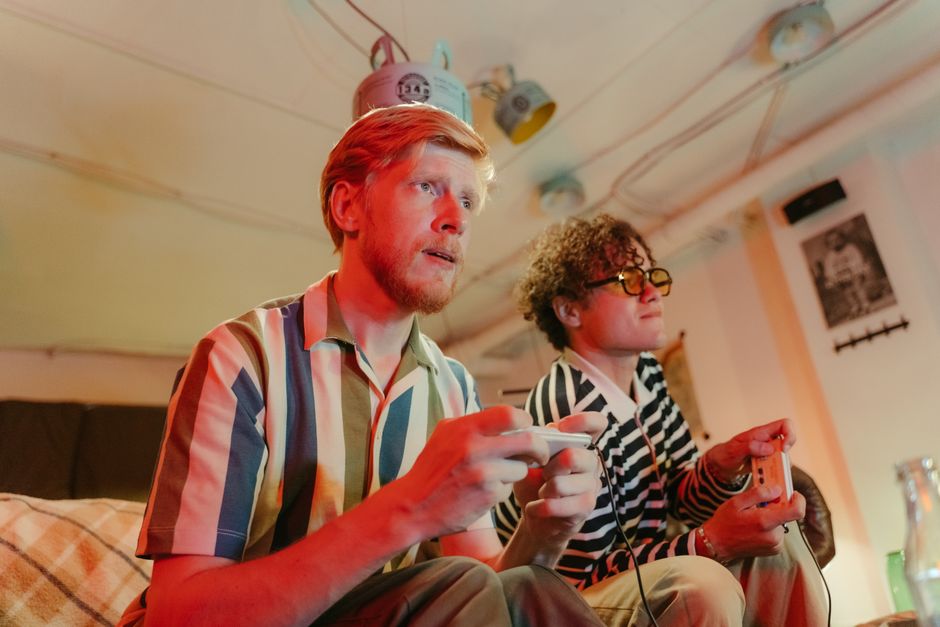
High end PC gamers always want to max every slider to the right and push native 4K resolution at high refresh rates. Doing that in Phantom Blade Zero is going to require serious iron. If the developers implement mandatory or heavily integrated ray tracing features, you are looking at needing top tier hardware just to keep things smooth without relying heavily on temporal upscaling.
Speaking of upscaling, DLSS and FSR will be mandatory best friends for almost everyone playing this game on PC. Even the most powerful graphics cards on the market struggle to maintain native high refresh rates in heavy Unreal Engine 5 games without leaning on AI-driven frame generation and supersampling. S-Game will almost certainly bake Nvidia DLSS, AMD FSR, and Intel XeSS support directly into the PC release. If you own an older graphics card that lacks tensor cores or dedicated hardware upscaling support, you might find yourself struggling to maintain performance during the busiest combat encounters.
VRAM usage is another elephant in the room. Modern ports frequently run into severe performance snags if they do not manage video memory effectively. Textures in Phantom Blade Zero look exceptionally crisp, featuring intricate armor designs, detailed skin shaders, and complex environmental backdrops. Running these assets at maximum settings will easily demand twelve to sixteen gigabytes of VRAM. If your graphics card only has eight gigabytes, you will likely need to knock the texture quality down a notch or two to avoid horrific stuttering caused by memory swapping over the PCIe bus.
Storage and Solid State Realities
Gone are the days when you could install a massive action game on a traditional mechanical hard drive and expect it to run smoothly. Unreal Engine 5 relies heavily on fast asset streaming to load geometry and textures on the fly. If you try to run Phantom Blade Zero off an old spinning hard disk, the game will completely fall apart. Textures will fail to load, assets will pop into existence right in front of your character, and loading screens will take an eternity.
A fast NVMe solid state drive is mandatory. Not optional, mandatory. S-Game will almost certainly list an SSD as a strict requirement on their final system specification sheet. Furthermore, because of the sheer density of modern game files, you should clear out at least one hundred gigabytes of free space on your drive before pre-loading the title. Between high fidelity audio files, uncompressed texture packs, and level geometry, modern game sizes are only growing larger.
Combat Design and PC Controls
Hardware specifications are only half the battle when discussing a PC port. The input method you choose will completely dictate your experience with Phantom Blade Zero. This game was born from a lineage of fast-paced martial arts action titles. The combat system features complex combo chains, parry windows, stance switching, and directional inputs that mimic classic fighting games mixed with character action flair.
Playing a game like this on a standard keyboard and mouse setup is entirely possible, but it rarely feels optimal unless the developers spend an immense amount of time remapping the default control layout and building intuitive mouse steering options. Most veterans of the genre will tell you to dust off your favorite gamepad. Whether you prefer a PlayStation DualSense controller or an Xbox Series X gamepad, having analog triggers and thumbsticks makes feathering your dodges and timing your parries infinitely more comfortable than slamming your fingers across a mechanical keyboard.
That being said, a good PC port should offer robust key rebinding options, fully customizable mouse sensitivity curves, and distinct user interface elements that adapt depending on whether you are holding a controller or sitting at a desk. S-Game has a lot riding on this project, and delivering a clean, feature-complete PC version with ultra-wide monitor support, unlocked frame rates, and FOV sliders will win over the notoriously picky digital storefront crowd immediately.
The World and Lore Setup
While everyone talks about the swordplay, the actual setting of Phantom Blade Zero deserves a deep dive because it heavily influences how the game will run and feel. S-Game calls their aesthetic Phantompunk. It is a brilliant collision of traditional ancient Chinese wuxia storytelling with dark steampunk machinery, occult mysticism, and gothic architectural horror. You play as Soul, a member of an elite assassin organization who has been framed for the murder of his master. He is mortally wounded during the betrayal, saved by a mysterious mystic, and given a ticking clock. He has roughly sixty days to find the true mastermind before his artificially sustained heart gives out permanently.
This ticking clock mechanic creates an immediate sense of urgency that permeates the level design. You are not wandering through a bright, cheerful fantasy kingdom. You are trudging through rain-slicked alleyways, sprawling industrial monasteries, underground torture chambers, and ruined temples choked with clockwork gears and shadowy monsters. These environments feature verticality, hidden pathways, and interconnected loops that reward careful exploration.
From a technical standpoint, densely packed gothic architecture with heavy shadows and volumetric fog is notoriously expensive to render. This explains why the system requirements will lean heavily on modern hardware. Every single screen of Phantom Blade Zero looks like a concept art painting brought to life. Maintaining that visual standard while keeping the combat snappy and responsive at sixty frames per second or higher requires serious engineering wizardry.
Managing Expectations for the Launch
The gaming community has a bad habit of building unreleased games up into mythical masterpieces before they even launch. We see it every single year. A developer shows a breathtaking vertical slice of gameplay, fans project every single feature they have ever wanted into the final product, and then reality sets in when the game actually launches and has a few minor bugs or missing features.
Phantom Blade Zero is shaping up to be an incredible experience, but we need to keep our expectations grounded. S-Game is expanding their scale exponentially with this project. Moving from 2D side-scrolling titles to a massive, AAA-budget 3D action RPG is a monumental leap. There might be rough edges at launch. There might be some performance optimization patches needed during the first week. Expecting perfection out of the gate is a recipe for disappointment, but expecting a deeply satisfying, mechanically rich combat system is entirely fair based on everything we have seen so far.
Keep an eye on official channels over the coming months. As we creep closer to a concrete release date, S-Game will drop the official PC system requirements, giving us the exact numbers we need to judge our hardware. Until then, make sure your storage drives have plenty of free space and start saving up if your graphics card is starting to show its age. Phantom Blade Zero wants to push your system, and you will want the right horsepower under the hood when Soul finally draws his blade.
The martial arts action genre is having a quiet renaissance right now, and Phantom Blade Zero sits comfortably at the absolute vanguard of that movement. Whether it arrives in late 2025 or slips into early 2026, the wait is going to test our patience. Stay sharp, check your hardware specs, and get ready for a wild ride through the dark, rain-soaked alleys of the Phantompunk underworld.
Mastering the Art of the Deflect
We need to spend a little more time dissecting how the actual steel-on-steel violence works in motion because it separates this game from standard soulslikes. Most games in the subgenre rely heavily on a stamina meter that punishes you for attacking too frequently. Phantom Blade Zero throws that tired design philosophy out the window in favor of continuous momentum. Soul does not get tired from swinging his sword. He gets rewarded for maintaining an relentless offensive pressure that forces enemies onto their back foot.

This design choice shifts the psychological burden from defensive patience to aggressive timing. You are constantly watching enemy animation frames to find the exact microsecond you need to deflect an incoming halberd strike or sidestep a sweeping chain whip. When you successfully parry, the game does not just play a generic clanging sound and push the enemy back slightly. It triggers visceral counter-attacks that chain directly into your ongoing combo string. You can seamlessly transition from a frantic flurry of short blade strikes into a heavy dual-wielded overhead chop without missing a single frame of animation.
Boss fights are where this system truly shines. S-Game has clearly studied the masters of the genre, but they are adding their own distinct rhythm to the encounters. These bosses do not stand around waiting for you to finish your attack animation. They push the pace just as hard as you do, utilizing complex multi-stage attack patterns that demand absolute mastery of your defensive toolkit. Some bosses will switch weapon stances mid-fight, forcing you to completely alter your approach on the fly. If you try to play this game like a traditional tactical RPG where you roll away, wait for an opening, and poke once, you are going to get shredded. You have to dance on the edge of a razor blade and meet every strike with an equally violent answer.
Weapon Variety and Customization Depth
Soul is not locked into using a single sword for the entire twenty-hour journey. Trailers have teased a staggering arsenal of auxiliary weapons that you can equip alongside your primary blade. We are talking about massive mechanical gauntlets, heavy war hammers, throwing daggers, hidden arm cannons, and esoteric talisman tools that alter your combat capabilities on the fly.
This weapon swapping system operates in real time. You can string together a heavy sword combo, instantly swap to a pair of brass knuckles to stagger a heavily armored knight, and then finish the execution with a ranged projectile before the enemy hits the floor. The combinatorial depth here is immense. Different weapons scale with different playstyles, and finding the loadout that matches your personal rhythm will take some experimentation.
Upgrading these tools will require scavenging rare materials hidden away in the darkest corners of the world. S-Game is building a progression system that rewards thorough exploration without leaning on tedious open-world busywork. You will not find hundreds of pointless map markers or copy-pasted bandit camps here. Instead, exploration feels purposeful and slightly dangerous, reminiscent of classic Metroidvania design translated into three dimensions. You spot a high ledge across a broken bridge, figure out a way to traverse the gap, and discover a hidden blacksmithy workshop containing a blueprint for a legendary weapon mod. That is the kind of loop that keeps players hooked long after the combat novelty wears off.
The Audio Landscape and Atmospheric Immersion
Visuals and combat mechanics often steal the spotlight in pre-release hype cycles, but sound design anchors the entire experience. When you are fighting three elite guards in a rainy courtyard, the audio mix needs to sell every drop of blood and every clash of iron. S-Game is employing a layered sound design approach that makes the combat feel genuinely heavy.
The sound of rain hitting asphalt blends with the wet squelch of leather boots and the sharp, ear-piercing screech of high-carbon steel scraping against bone and armor. Weapon impacts have distinct sonic signatures depending on what material you are hitting. Striking a shield sounds hollow and authoritative, while slicing through flesh carries a dull, wet thud that makes you wince. The musical score leans heavily into traditional Chinese instrumentation like the guzheng and dizi, but mixes those ancient sounds with heavy industrial percussion and distorted electronic bass drops. It sounds abrasive, haunting, and completely unique.
This audio-visual synergy is critical for gameplay readability. In fast action games, your ears often process audio cues a fraction of a second before your eyes register an incoming attack from off-screen. If a specific enemy wind-up has a distinct mechanical whir or a sharp intake of breath, you learn to react to the sound instinctively. Developers who nail this balance create combat systems that feel almost hypnotic once you find your flow state.
Level Design and the Metroidvania Blueprint
We need to talk about how the world actually connects because Phantom Blade Zero is not an open world game in the modern Ubisoft sense. S-Game is opting for a curated, semi-open world structure that relies on massive, intricate hubs connected by hidden shortcuts, locked doors, and vertical traversal routes.
This approach allows the environmental artists to pack an absurd amount of detail into every square inch of the map without sacrificing performance stability on target hardware. When you are not playing in a sprawling open field, developers can aggressively optimize occlusion culling, meaning the engine only renders what is directly in front of or visible to the player camera at any given moment. That technical trickery is vital for maintaining high frame rates in Unreal Engine 5.
Exploration in these interconnected spaces always carries a sense of palpable dread. You might push deep into an underground mining facility, exhaust your healing items, and stumble upon a locked gate that leads right back to the central shrine you visited an hour ago. Unlocking that shortcut provides a massive rush of relief. It is a tried and true formula, but executing it with this specific Phantompunk aesthetic gives it a fresh coat of paint. You never quite know what lurks behind the next heavy iron door, whether it is a twisted clockwork monstrosity or a desperate merchant selling rare crafting materials for exorbitant prices.
Enemy AI and Encounter Variety
A great combat system means nothing if the things you are fighting act like mindless punching bags. S-Game has spoken about building an advanced artificial intelligence system that governs how enemies react to your positioning, weapon choices, and health status.
Lower-tier grunts will initially try to overwhelm you through sheer numbers, swarming your position if you let them surround you. However, if you manage to systematically dismantle their squad leader or parry their opening attacks with brutal efficiency, the surviving foot soldiers will visibly hesitate, sometimes backing away or changing their attack patterns to maintain defensive distance. Elite enemies and bosses take this a step further by reading your inputs. If you lean too heavily on a specific combo string or panic-roll in the same direction every time you get nervous, the boss will catch on, adjust their timing, and punish your predictability.
This adaptive AI forces you to stay intellectually engaged during every single encounter. You cannot simply memorize a static routing guide and autopilot your way through the game. You have to read the room, identify the biggest threat, and dismantle the enemy group piece by piece. Encounter design like this keeps regular mob fights feeling genuinely dangerous rather than acting as boring filler between major boss arenas.
The Quest Structure and Narrative Delivery
Storytelling in action role playing games often falls into one of two traps. Either the game buries you under endless walls of dry lore text and confusing exposition dumps, or it abandons narrative context entirely so you can just hit things. Phantom Blade Zero appears to be threading a very careful needle between these two extremes.
The narrative is deeply personal. Soul is operating on borrowed time with his sixty-day lifespan ticking away constantly in the background. Every interaction you have with the bizarre cast of survivors, rival assassins, and corrupt officials carries weight because everyone has their own hidden agenda and motivations. The game avoids long cinematic cutscenes that completely halt the pacing of the adventure. Instead, much of the world-building happens environmentally through subtle visual cues, ambient dialogue overheard in passing, and brief, punchy conversational exchanges that happen while you are actively exploring.
Side quests are designed to be compact, meaningful vignettes rather than endless fetch quest chains. You might cross paths with a disgraced former weapon smith who begs you to retrieve a stolen family heirloom from a dangerous bandit hideout. Succeeding grants you access to unique upgrade paths, while failing or ignoring the request alters how characters interact with you down the road. This reactive storytelling style encourages multiple playthroughs, giving players a reason to dive back into the Phantompunk underworld to see how different choices ripple through the narrative web.
Post-Launch Support and the Long Game
Looking past the initial launch window, any game of this scale needs a sustainable post-launch roadmap to keep its community engaged. While S-Game has not detailed explicit expansions or seasonal content drops yet, the framework of the universe leaves plenty of room for future storytelling.
The world of Phantom Blade is massive, encompassing numerous provinces, rival sects, and occult factions that we only catch glimpses of during the main campaign. If the game hits commercial and critical targets, expanding outward with DLC chapters focusing on different characters or historical eras within the same universe makes total sense. More immediately, the community will undoubtedly be looking for quality-of-life updates, photo modes, and potentially even higher difficulty modifiers or boss rush modes for the hardcore action crowd.
Developers who build robust combat engines often find that players will invent entirely new ways to play the game long after the credits roll. Speedrunners and combo video creators will inevitably dissect every frame of Phantom Blade Zero, finding animation cancels and movement tech that the developers never even anticipated. Supporting that passionate community with proper modding tools or officially sanctioned performance tweaks will determine whether this game becomes a temporary flash in the pan or a lasting cult classic that people talk about for years.
Final Thoughts on the Journey Ahead
The wait for Phantom Blade Zero is a test of collective gamer patience. We have all been burned by hype trains that promised the moon and delivered a crater, but every new slice of gameplay footage released by S-Game suggests they are genuinely cooking up something special. The combination of lightning-fast martial arts combat, stunning Unreal Engine 5 visuals, and a relentlessly atmospheric Phantompunk setting makes it one of the most exciting titles on the horizon.
Prepare your hardware, clean out your NVMe storage drives, and start practicing your deflection timings. When Soul finally steps out into the rain and draws his blade against the world that betrayed him, we are all going to find out if the final product lives up to the impossible expectations set by those initial trailers. If the developers stick the landing, the action role playing genre is going to have a new heavyweight champion to contend with.