The Weight on Marcus Phoenix
Xbox is in a strange spot right now. You can look at sales charts, hardware availability, or the shifting tides of subscription services, but the conversation always circles back to games. Hardware specs matter until they do not. Ecosystem features keep people in the digital fold until a rival console drops something undeniable. What actually moves the needle for a platform holder is the software that dominates the cultural conversation for months on end. Gears of War E Day represents a turning point for Microsoft. This is not just another sequel in a long running franchise. This is a referendum on whether the current Xbox strategy can still produce the kind of defining, massive budget blockbusters that shape an entire generation of gaming.
People forget how massive Gears of War used to be. Back in the Xbox 360 days, Epic Games built a gritty, chest high wall tactical shooter that practically defined high definition gaming. It showed off what Unreal Engine 3 could do, and it gave Microsoft a macho, bombastic flagship that could go toe to toe with Sony icons like God of War and Uncharted. When Microsoft bought the rights and handed the reins to The Coalition, the studio did a commendable job keeping the lights on. Gears 4 and Gears 5 were genuinely good video games. They looked stunning, ran at buttery smooth frame rates, and respected the lore established by the original trilogy. Yet, those games existed in a slightly different shadow. They felt like maintenance of a legacy rather than the birth of a new era.
E Day changes the brief. By taking us back to the literal first day the Locust emerged from the bowels of the planet Sera, The Coalition is playing the nostalgia card, but they are doing it with a specific purpose. This is a horror story disguised as an action game. The original trilogy gave us battle hardened soldiers who knew how to chainsaw a drone in half without blinking an eye. E Day introduces us to a younger Marcus Fenix and Dominic Santiago before the war hardened them into stoic legends. They are confused, terrified, and outgunned. The Locust are not just an established enemy faction in this setting. They are an unstoppable, terrifying plague that nobody understands yet. That narrative shift gives the developers a chance to reset the tone and bring back the genuine tension that made the 2006 original feel like a revelation.
Why This Specific Prequel Matters Now
Every major platform holder goes through identity crises. Sony spent the past few years chasing live service trends with mixed results before pumping the brakes. Nintendo just keeps doing its own thing with massive success while everyone else tries to figure out the hardware roadmap. Microsoft spent the last half decade buying up massive publishers like Bethesda and Activision Blizzard. That expansion filled out the Game Pass library in a major way, but it also raised questions about the core identity of Xbox as a hardware ecosystem. If you can play all these games on a PC, a handheld, or eventually a competitor's console, why buy an Xbox box?
The answer has always been about the native console experience and the prestige of first party exclusives that push hardware to its absolute limit. Over the past few years, the release calendar has felt a bit sparse on the kind of blockbuster single player cinematic experiences that dominate social media feeds for weeks. Hi Fi Rush was incredible, but it was a smaller budget passion project. Redfall was a disaster. Starfield had its fans, but it divided the community in ways Bethesda games usually do not. Halo Infinite had a great campaign and strong gunplay, but the live service support faltered and lost momentum.
Gears of War E Day cannot afford to stumble. It has to be a technical showcase. The Coalition has always been an engine showcase studio. They worked closely with Epic Games on the Unreal Engine, and their internal tech team usually figures out tricks that other developers take years to adopt. When E Day was revealed with that stunning cinematic trailer, it immediately set a high bar. While cinematic trailers are heavily polished and rarely represent actual gameplay, The Coalition has a reputation for delivering games that look remarkably close to their promotional material. If E Day arrives and looks like a generational leap, it gives hardware fans a reason to care about the next iteration of Xbox hardware, whenever that might be.
The Technical Burden of Unreal Engine 5
We need to talk about Unreal Engine 5 because it dictates how E Day will run and look. Epic Games built their new engine to push photorealism through technologies like Nanite and Lumen, but utilizing those tools effectively on console hardware requires serious technical wizardry. Many games built on Unreal Engine 5 have suffered from stuttering, frame rate drops, and resolution scaling issues on current generation systems. Developers often lean too heavily on upscaling technologies like DLSS or FSR to hit acceptable performance targets, sometimes resulting in soft image quality or noticeable artifacts.
The Coalition is uniquely positioned to solve these problems. They are essentially Unreal Engine royalty. When they built Gears 5, they squeezed every drop of performance out of the Xbox One X and the early architecture of the Xbox Series X. They know the engine inside and out because they helped build the tools that developers worldwide rely on today. E Day is going to be a stress test for Unreal Engine 5 on consoles. If The Coalition can deliver a visually jaw dropping game that runs at a locked sixty frames per second in campaign mode, with minimal stutter and incredible destruction physics, it establishes a technical benchmark for the entire industry.
Destruction is a key piece of the puzzle here. The Locust emergence is violent, messy, and chaotic. Buildings crumble, streets cave in, and entire cities turn into dust bowls. To make E Day feel distinct from previous entries, the game needs to showcase a level of environmental interaction that feels generational. We are past the era where a concrete wall is entirely indestructible except for predetermined scripting moments. Gamers expect debris to react, cover to get chipped away dynamically, and the scale of the destruction to match the apocalyptic stakes of the narrative. If The Coalition pulls this off, it justifies the immense resources poured into the studio and validates Microsoft's long term studio management strategy.
Shifting Away From Safe Sequels
One of the biggest criticisms leveled against modern triple A game development is how safe everything feels. Studios spend hundreds of millions of dollars on a single project, meaning they cannot afford to take risks that might alienate a segment of the audience. This leads to homogenized game design where open worlds are filled with checklist side quests, combat systems are heavily iterated versions of ten year old templates, and stories are sanitized to avoid offending anyone globally. Gears of War could easily have fallen into that trap.
Think about where the story left off. Gears 5 ended on a massive cliffhanger with a major character death choice that the developers would have to canonize or address. Continuing that modern timeline meant dealing with messy lore baggage, drone hive minds, and the fatigue of a war that had been dragging on for decades across multiple generations of characters. By hitting the reset button and going backward in time, The Coalition bypassed all of that narrative clutter.
E Day allows the writers to tell a self contained story with a clear beginning, middle, and end, even though we know where the characters ultimately end up years later. That freedom is vital. It lets them focus on tone, pacing, and mood instead of worrying about how a specific plot point fits into an expanding universe bible. We are going back to basics. No convoluted Swarm tech, no robotic enemies that lack personality, and no sprawling open worlds that dilute the tight pacing. Just Marcus and Dom, a few dwindling squad mates, and a planet tearing itself apart from underneath their boots. That focused scope is precisely what the franchise needs to regain its cultural footing.
Game Pass and the Day One Dilemma
You cannot talk about an Xbox exclusive without addressing Xbox Game Pass. The subscription service remains a brilliant deal for consumers, but its financial impact on big budget single player games is still a subject of heavy debate within the industry. When a game launches directly into a subscription service where millions of players can access it for a nominal monthly fee, traditional unit sales take a massive hit. Microsoft has to justify the hundreds of millions of dollars spent on development through player retention, ecosystem lock-in, and microtransactions rather than upfront box office receipts.
Gears of War E Day will be a Day One Game Pass title. That means its success cannot be measured by traditional weekend sales charts alone. Microsoft will look at engagement metrics, hours played, cooperative playthrough completion rates, and how many new subscribers the game pulls into the ecosystem. For the players, this is fantastic news. You get a massive, premium budget blockbuster on day one without having to drop seventy dollars. For the platform, however, the pressure is immense. If a game of this magnitude launches and fails to retain a massive active player base, it sends a troubling signal to shareholders about the viability of funding massive single player experiences inside a subscription model.
Cooperative play is another crucial element that ties directly into the Game Pass ecosystem. Gears of War practically invented modern cooperative campaign design on consoles. Dropping into a campaign with a buddy, splitting up to flank a Theron Guard, or reviving each other while bullets whiz past your ears is the beating heart of this franchise. In an era where cooperative gaming has largely shifted toward live service extraction shooters and battle royales, a pure, unadulterated, linear cooperative campaign is a rare commodity. E Day needs to nail that cooperative flow. If it provides a campaign that is just as fun with a second player as it is solo, it will secure positive word of mouth that lasts for months.
The Multiplayer Question
While the campaign usually gets the lion share of the attention in a Gears of War discussion, the multiplayer community is fiercely loyal and demands specific things from a release. Gears multiplayer has always occupied a strange space. It is not like Call of Duty, where anyone can pick up a controller and get a random kill by aiming down sights. Gears multiplayer is a distinct fighting game disguised as a third person shooter. It relies on advanced movement techniques, specific pacing with the Gnasher shotgun, and an understanding of weapon spawn timings that takes hundreds of hours to master.
This creates a difficult balancing act for The Coalition. If they change the movement mechanics too much to appeal to a broader, more casual audience, the hardcore veterans will riot on forums and social media. If they keep the mechanics completely opaque and punishing for newcomers, the multiplayer playlist will die out within a month, leaving only a small, ultra competitive core of players who destroy everyone else.
E Day needs to find that sweet spot. It needs to honor the legacy of wall bouncing, gibbing, and tactical positioning while providing onboarding tools that help new players understand why the combat feels the way it does. Horde mode also needs to make a triumphant return. The cooperative wave survival mode was one of the defining innovations of the Xbox 360 era, and players expect a fully fleshed out, deep progression system for Horde right out of the gate. If the package includes a thrilling campaign, a robust and modernized multiplayer suite, and a satisfying cooperative mode, it justifies the long development cycle.
What This Means for the Rest of Xbox Studios
The health of a platform holder depends on its entire roster of studios, but tentpole franchises set the weather. When Sony releases a major first party game like God of War Ragnarok or Marvels Spider Man, it anchors their entire marketing push and reassures fans that investing in their hardware was the right call. Xbox has lacked that steady drumbeat of undeniable prestige releases in recent years. We have seen great games, ambitious games, and interesting niche titles, but we have not seen many cultural juggernauts that command the global gaming conversation for a full month.

If Gears of War E Day launches to critical acclaim, massive player engagement, and high technical praise, it changes the narrative around Xbox Studios entirely. It proves that internal teams can take classic IP, respect its heritage, and elevate it to modern standards without losing the plot. That success radiates outward. It gives confidence to other teams working on major projects like the upcoming Fable reboot, Perfect Dark, and whatever else is lurking in the pipeline.
Conversely, if E Day feels safe, technically troubled, or fails to capture the imagination of the broader gaming public, the questions surrounding Microsoft gaming strategy will only get louder. Critics will point to it as proof that massive studio acquisitions and subscription models dilute creative focus and prevent studios from delivering focused masterpieces. That is a heavy burden for Marcus and Dom to carry, but they are fictional war heroes built for heavy lifting.
The Cultural Footprint of Sera
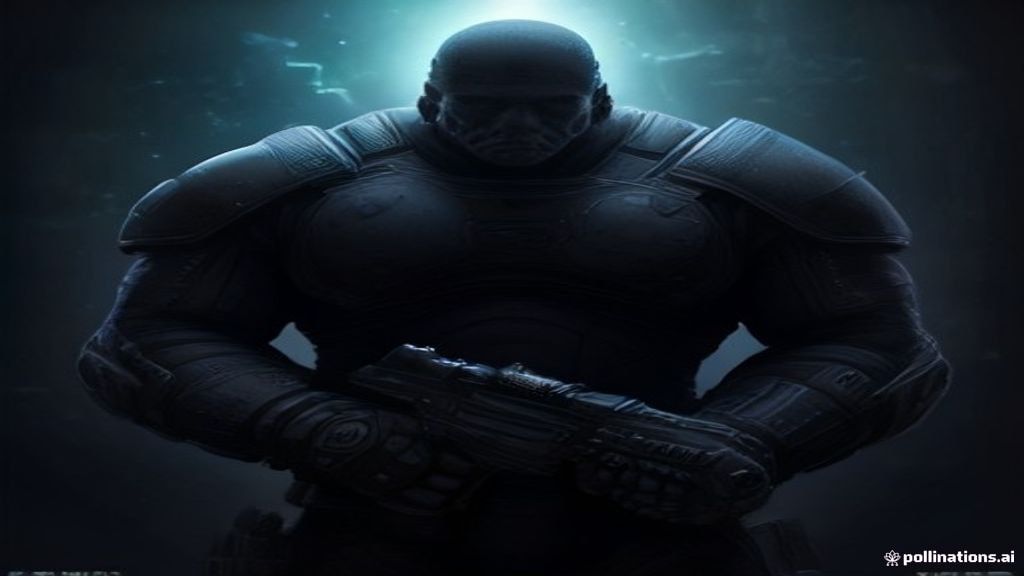
There is something uniquely comforting about the aesthetics of Sera. While modern gaming trends have often gravitated toward sleek sci fi environments, hyper realistic modern military settings, or stylized fantasy worlds, Gears of War owns its distinct brand of brutalist architecture and Gothic industrialism. The buildings look heavy, reinforced, and slightly oppressive. The armor worn by the COG soldiers looks like it weighs a thousand pounds, complete with massive shoulder pads and ridiculous proportions that somehow make total sense within the exaggerated reality of the universe.
That visual identity is a massive asset. In a marketplace flooded with games that often blend together visually, you can spot a screenshot of Gears of War from across the room. E Day gives the art team a chance to show us Sera before it was completely scarred by decades of war. We will see cities that are still functioning, architecture that has not yet been reduced to rubble, and a society that is blissfully unaware of the nightmare lurking beneath their feet. That contrast will make the eventual emergence of the Locust feel all the more devastating.
Art direction matters because it creates a lasting impression. When people talk about classic video game moments years later, they talk about the atmosphere, the lighting, the music, and the sheer impact of seeing something unexpected for the first time. The original Gears of War gave us that moment when the Berserker smashed through a stone wall in a dimly lit mansion. E Day needs to recreate that sense of dread. It needs to make players feel small and vulnerable inside a world that is suddenly falling apart.
Looking Past the Launch Window
The real test of any major game today happens six months after release. Launch hype is easy to generate with a good marketing budget and a shiny cinematic trailer, but sustaining a community requires ongoing support, meaningful updates, and a reason to keep coming back. For a game like E Day, that means how the developers handle post launch content for both multiplayer and cooperative modes.
Microsoft cannot afford to drop a game and move on immediately. The modern gaming audience expects transparency, regular communication, and a clear roadmap for future content. Whether that means new maps, classic characters returning through seasonal updates, or special narrative events, the support team needs to be active and responsive. If The Coalition manages to build a game that not only thrills players on day one but also maintains a healthy, vibrant community long after the initial reviews drop, it establishes a new standard for how Xbox handles its flagship legacy properties.
The gaming landscape is more competitive than ever. Players have endless choices, subscription services give them access to thousands of titles at any given moment, and attention spans are shorter than they used to be. A game has to fight for every minute of a player's time. Gears of War E Day has the heritage, the studio pedigree, and the iconic characters to command that attention, but it has to execute every single element with precision.
Everything comes down to this prequel. If The Coalition delivers the masterpiece fans are hoping for, Xbox enters its next chapter with undeniable momentum, proving that its core franchises still hold massive cultural power. If it misses the mark, the debate over the future of the ecosystem will only intensify. The chainsaws are revving up, and the entire industry is watching to see who gets cut.
The Soundscape of War
We rarely talk about audio design until a game gets it completely wrong, but sound is half the reason the original trilogy worked so well. When you pull the trigger on a Lancer, you need to hear the mechanical chug of the motor before the teeth bite into bone. That heavy industrial audio feedback grounds the combat in a physical reality. The Coalition understands this better than almost anyone else working in the engine today. They treat audio not as an afterthought slapped on during the final months of polish, but as a foundational pillar of the gameplay loop.
For E Day, the soundscape needs an entire ground up reconstruction because the context of the war has changed. These weapons are not battle tested yet. They might jam or stutter. The Locust should not sound like a generic monster closet roaring at the camera. Their communication should feel alien, guttural, and unsettling. When the ground splits open, the acoustic weight of collapsing buildings and shifting tectonic plates needs to rattle your subwoofer. Great audio design creates spatial awareness that lets you track threats in the dark before you even see them on screen. If the developers lean into dynamic soundscapes that react to enclosed spaces and ruined city streets, the horror elements will land with twice the impact.
The Supporting Cast and Emotional Stakes
Marcus and Dom might be the headliners, but a great war story lives or dies by its supporting cast. The original games gave us unforgettable side characters like Cole Train and Baird, but E Day has a unique storytelling challenge. We already know where Dom and Marcus end up. We know the tragedies that await them further down the line. Because of that pre established tragic trajectory, the new faces introduced in this prequel carry a specific kind of narrative dread. Anyone who fights alongside Marcus and Dom in these early hours might not survive the week.
Writing characters who are doomed from the start requires a delicate touch. You have to make the player care about their survival even when historical inevitability hangs over the campaign. If the writing team at The Coalition treats these new squad mates as mere cannon fodder, the emotional beats will fall flat. They need to show us quieter moments between firefights where the sheer terror of the Locust threat breaks through the macho military bravado. Those small character beats are what transformed the original trilogy from a mindless testosterone trip into a surprisingly grounded story about brotherhood and grief. If E Day can capture that same emotional vulnerability, it separates itself from the cynical rehashes that plague modern media franchises.
Accessibility and the Modern Player Base
Gaming has changed drastically since 2006. The audience that grew up playing the Xbox 360 has aged up, taking on careers and families while younger generations are discovering the medium through entirely different avenues. A modern blockbuster cannot afford to ignore accessibility. When we talk about accessibility in games, people often default to colorblind options or remappable controls, which are certainly vital. However, it also includes onboarding pacing, difficulty scaling, and respect for the player's time.
The original Gears titles were notoriously punishing on higher difficulties, relying on aggressive enemy swarms and tight checkpointing that could lead to genuine controller throwing frustration. Modern game design requires a balance between challenge and flow. A player should feel tested without feeling stonewalled by cheap artificial intelligence routines. If E Day can offer flexible cooperative matchmaking, smart checkpoint systems, and clear visual signposting without sacrificing its gritty, oppressive atmosphere, it opens the door for a wider audience to experience the story. Microsoft needs this game to appeal to lapsed fans and curious newcomers alike, which means the entry barrier to cooperative play needs to be lower than ever.
The Business Reality Beyond the Console
We have to look at the broader business machinery surrounding a release of this scale. In an era where game development budgets regularly cross the two hundred million dollar mark, traditional profitability metrics no longer apply to first party Xbox titles. When a game launches directly into a subscription tier, its success is measured in months and years of sustained engagement rather than opening weekend box office receipts. This shifts how developers think about pacing and post launch content loops.
If players finish the campaign in ten hours and immediately uninstall the game, the subscription model takes a hit on long term value retention. This explains why publishers push so hard for robust multiplayer suites, cooperative horde modes, and regular seasonal content updates. They need you to keep the app open on your dashboard. The Coalition faces the ultimate test of balancing a tight, cinematic, story driven campaign with a multiplayer ecosystem that can survive in a market dominated by free to play juggernauts. If they manage to build a package where the campaign hooks you emotionally and the multiplayer keeps you logging in with friends every weekend, it proves the modern Xbox business model can actually sustain prestige single player development over the long haul.