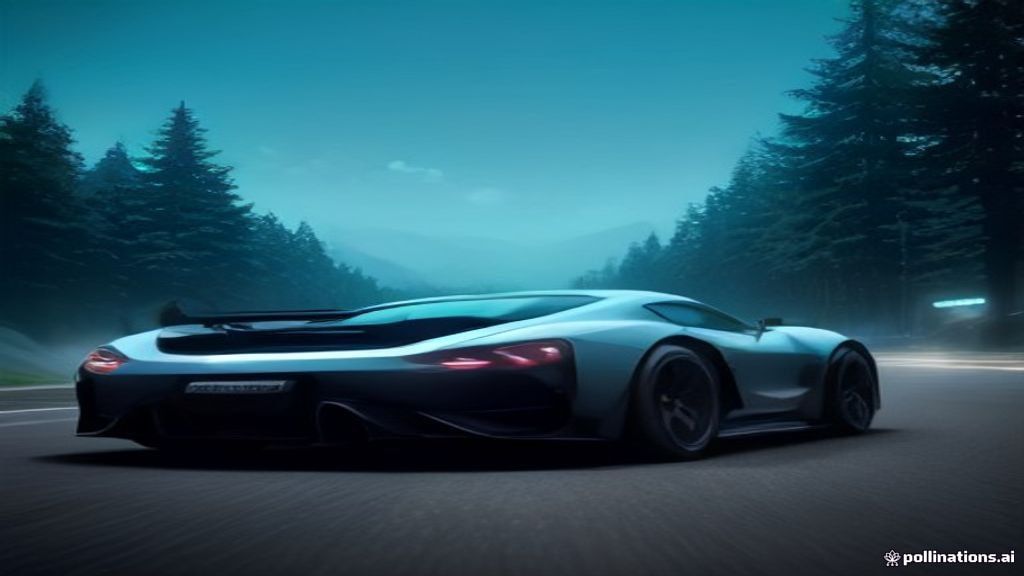
The Shocking Timeline Shift for Playground Games
Forza Horizon has always operated like clockwork. Every two years, Microsoft rolled out a new slice of automotive tourism, taking us from the sun soaked roads of Australia straight into the changing seasons of the UK and eventually across the vibrant landscapes of Mexico. Fans expected the pattern to hold. Rumors pointed toward a late 2025 release window, and whispers in the industry suggested the team at Playground Games was deep into the final polish stages. Then the silence stretched on a little too long. Rumors turned to concern, and today, the studio finally broke that silence with an announcement that completely alters the trajectory of the franchise. Forza Horizon 6 is officially delayed to 2027, and it is coming to PlayStation 5 on day one alongside Xbox and PC.
This is a massive earthquake for the racing genre. For years, the Forza series served as the ultimate crown jewel for the Xbox ecosystem. It was the game you pointed to when people asked why you bought an Xbox Series X. Hearing that the next entry is not only slipping by two whole years but also landing on Sony hardware breaks a decades long paradigm. Yet, if you look closely at the development realities facing the studio right now, the delay starts to make a lot of sense. Playground Games expanded rapidly over the last four years. They are splitting their focus between this massive racing franchise and their upcoming revival of Fable. Juggling two gargantuan open world games with bleeding edge visual targets is no small feat. Add in the monumental technical undertaking of building a brand new proprietary engine version that can scale gracefully across three entirely different console architectures and PC hardware, and you quickly realize why the team raised the white flag on the 2025 release date.
Fans on social media are already split down the middle. Some are furious about the wait, arguing that four years since Horizon 5 is far too long for a cyclical sports and racing franchise. Others are breathing a sigh of relief. They would rather see a delayed game that actually innovates than another iterative patch job that just recycles assets from the previous generation. Playground Games has earned a massive reservoir of trust over the last decade. When they say they need more time to build their vision, most veteran players are willing to give them the benefit of the doubt. Still, waiting until 2027 means we are looking at a six year gap between main installments. That is an eternity in modern gaming, and it leaves a massive vacuum in the racing genre for competitors to exploit.
Breaking Down the PlayStation 5 Surprise
The decision to bring Forza Horizon 6 to the PlayStation 5 is perhaps the biggest industry shocker of the year. Microsoft adopted a multiplatform publishing strategy for several of their smaller titles over the past twelve months, but nobody truly expected them to surrender their premier driving franchise. The wall has officially crumbled. Phil Spencer and the Xbox leadership team clearly decided that the financial ceiling of keeping Forza locked to a single ecosystem is no longer viable in an era of skyrocketing development budgets. Racing games are expensive to make, especially when you factor in the massive licensing costs required to feature hundreds of real world cars from dozens of global manufacturers. Porsche, Ferrari, Lamborghini, and Ford do not sign away their likenesses for free, and getting those contracts renewed across multiple years requires massive capital.
Bringing the game to PlayStation 5 instantly expands the potential player base by tens of millions of users. It ensures that the auction house stays lively, the online lobbies remain populated, and the custom liveries and event lab creations have a massive audience to consume them. For PlayStation owners, this is a monumental win. Sony has plenty of racing pedigree thanks to Gran Turismo 7, but that series leans heavily into a sterile, motorsport focused simulation style. Horizon offers the chaotic, open world, arcade leaning sandbox that has been completely absent from the PlayStation ecosystem since the MotorStorm and Driveclub days. Getting to cruise through a detailed open world map in a hypercar with your friends on a PlayStation console is something people have dreamed about since the original Xbox One era.
Technical performance on the PlayStation 5 is already a major talking point. Playground Games is utilizing a heavily upgraded version of their proprietary ForzaTech engine. This engine already punches above its weight on Xbox Series hardware, squeezing remarkable fidelity out of the console CPUs. Optimizing that pipeline for the PlayStation 5 hardware will be a fascinating technical challenge for the engineers. Sony consoles handle memory allocation and storage streaming in slightly different ways compared to Microsoft architecture, though both rely on custom solid state storage solutions. The developers confirmed that the PlayStation 5 version will feature full cross play and cross progression right out of the gate. You can maintain your garage, your level, and your progression whether you jump between a PC, an Xbox Series X, or a Sony console. The barriers are officially gone.
The Japan Setting and First Expansion Reveal

Every new Forza Horizon game lives and dies by its map. Playground Games finally addressed the most requested location in the history of the internet by confirming that Forza Horizon 6 takes place in Japan. The map is set to cover a diverse slice of the country, blending neon drenched urban sprawl in fictionalized dense city centers with winding mountain passes and rural agricultural regions. Drifting through narrow neon lit alleys at midnight while rain slicked asphalt reflects glowing billboards is the exact fantasy the community has chased for a decade. The developers are not just building a static postcard version of the country either. They built an entirely new dynamic lighting and weather system to capture the oppressive humidity of summer, the vibrant red hues of autumn foliage, and the heavy winter snows of the northern regions.
Alongside the base game reveal, the team surprised everyone by detailing the first major expansion before the game even launches. The expansion is titled Neon Drift, and it leans heavily into the underground car culture roots that made the Tokyo drift era a global phenomenon. Instead of just adding more hypercars, this expansion focuses on custom tuner culture, deep body kit modifications, engine swaps, and touge racing. The expansion map is a separate, highly dense mountain region featuring intricate touge courses with tight hairpin turns and massive elevation changes. Players will compete against fictional underground racing bosses who control different districts of the mountain. It feels like a direct nod to classic street racing games from the past, injected with the modern production values and handling physics that Playground Games mastered.
Car culture in Japan is distinct from the car culture found in the UK or Mexico. It is deeply rooted in precision, individuality, and technical mastery. The developers spent months embedded with car clubs in Tokyo and Osaka, scanning everything from classic vintage restorations to heavily modified drift missiles and futuristic bippu style luxury sedans. This dedication to authenticity means the car list at launch will likely cater heavily to JDM enthusiasts. Fans can expect an unprecedented level of visual customization options for these vehicles. The old, tired bumper and spoiler choices from previous games are being replaced by fully licensed aerodynamic kits from legendary Japanese tuning houses. If you want to build a authentic track day machine or a slammed stance car, the tools provided in the upgraded upgrade shop will give you more freedom than ever before.
Engineering the Physics and Handling Model
Physics form the invisible backbone of any great racing game. If the cars feel floaty, disconnected, or frustrating to control, even the most gorgeous open world in the world cannot save the experience. Playground Games understands this better than anyone, which is why the team built an entirely new tire simulation model for Forza Horizon 6. The previous iteration of the tire model was incredible for asphalt grip, but it always struggled slightly when transitioning between loose surfaces like dirt, mud, and tarmac. The new system accounts for tread deformation, heat buildup, and surface friction in real time. When you throw a heavy all wheel drive rally car onto a loose gravel road, you will feel the individual tires digging into the terrain, losing traction progressively rather than snapping into a generic drift state.
Tuning has also received a massive overhaul to satisfy the hardcore gearheads in the community. While Forza Horizon has always managed to strike a delicate balance between arcade accessibility and simulation depth, the developers noticed a growing appetite for more granular control. Players can now adjust tire pressure down to the decimal point, tweak individual damper rebound curves, and even modify differential ramp angles for both acceleration and deceleration. For casual players who just want to slap a twin turbo kit on a hatchback and hit the highway, these deep menus remain entirely optional. The game features an overhauled auto upgrade system that intelligently balances your car's performance index if you do not want to spend hours fiddling with gear ratios and suspension geometry.
Force feedback on steering wheels is another area seeing dramatic improvements. Historically, Forza Horizon was always designed with controllers in mind. Wheel support felt functional, but it often lacked the nuanced communication you would find in dedicated hardcore sims like Assetto Corsa or iRacing. The new physics engine features a dedicated direct drive force feedback output pipeline. This means players using high end hardware setups will feel every subtle shift in weight transfer, road texture, and loss of front end grip directly through their wheel rim. It elevates the game from a casual weekend cruiser into a genuinely satisfying driving sandbox that rewards patience, line selection, and throttle control.
Sound Design and the Audio Revolution
Cars are auditory experiences as much as they are visual ones. The deep, guttural roar of a V8 muscle car or the high pitched scream of a naturally aspirated V12 engine can make or break your immersion. Playground Games built an entirely new audio recording facility specifically for this project, capturing hundreds of real world vehicles under extreme loads on dynos and race tracks. They are not just recording idle and high RPM samples anymore. The audio engine now dynamically calculates exhaust resonance, backfires, turbo spool sounds, and mechanical whine based on your exact modification choices. If you install an aftermarket straight pipe exhaust on a four cylinder engine, the sound changes organically, taking on a harsher, more aggressive tone that reverberates off concrete tunnel walls and city buildings.
Environmental audio has also taken a massive step forward. Driving through the crowded streets of the new Japanese urban centers will sound completely different compared to cruising down a quiet coastal highway in the countryside. The game utilizes advanced ray traced audio propagation. This means sound waves bounce off buildings, echo through alleyways, and get muffled by dense vegetation in real time. If a rival car drifts past you on a tight mountain pass, you will hear the tire squeal echo off the rock faces across the canyon. The shift in acoustics adds an incredible layer of spatial awareness that helps you place your car on the road without needing to constantly stare at the mini map.
Radio stations remain a staple of the Horizon experience, and the curation team is currently locking down licensing deals for the upcoming soundtrack. While details are scarce, the developers hinted that the music selection will reflect the dual nature of the game, balancing high energy electronic music and drum and bass for the night racing scenes with ambient and indie tracks for daytime cruising. The festival vibe that defines the entire franchise is getting a makeover too. Instead of feeling like a generic corporate music festival dropped into a random field, the festival hubs in Japan feel integrated into local car culture gatherings, taking inspiration from real world weekend meetups at parking areas and industrial docks.
Multiplayer, Progression, and the Event Lab
Online connectivity is the lifeblood of modern gaming, and Forza Horizon 5 occasionally stumbled with server stability and convoy drops during its initial launch window. Playground Games built the online infrastructure for Forza Horizon 6 from the ground up to ensure seamless multiplayer integration. Convoys can now support larger player counts, and the transition between solo play and online freeroam happens instantly without long loading screens or unexpected disconnects. The horizon arcade events and cooperative adventures are more deeply integrated into the open world map, encouraging spontaneous cooperation with random players as you cruise through the countryside.
Progression is another area receiving a much needed philosophical shift. In past games, players were often handed hypercars within the first two hours of gameplay, watering down the sense of long term achievement. You could win a million credits from a wheelspin and buy the fastest car in the game before you even learned how to brake properly. Forza Horizon 6 introduces a more grounded campaign structure. You start out as an unknown gaijin driver working your way up through local grassroots car clubs, earning respect, unlocking parts piece by piece, and gradually earning invitations to bigger festival events. This slow burn progression loop makes finally acquiring and fully upgrading your dream car feel like a genuine milestone rather than a trivial checkbox.
Event Lab, the powerful track and game mode editor, is also getting a massive upgrade. Creators will no longer be limited to placing basic props and ramps. The new version of Event Lab features visual scripting tools, allowing players to create custom game modes, mini games, and even distinct progression rules within their custom maps. You can build drift competitions with custom scoring judges, police chase modes, or complex stunt arenas with moving obstacles and interactive triggers. The community created content has always been the main reason people keep playing these games years after release, and giving creators a more robust toolset ensures that the custom map scene will be vibrant and inventive from day one.

The Broader Industry Impact of the Delay
A delay into 2027 is a luxury that only a few studios can afford, but it speaks volumes about the shifting priorities of major publishers. Microsoft is playing a long game. They realize that rushing a marquee title just to hit a specific fiscal quarter earnings report often damages the long term reputation of the franchise. By giving Playground Games the extra two years they need, Xbox is signaling that quality matters more than a rushed release calendar. This philosophy is desperately needed in an industry that has spent the last several years stumbling through poorly optimized launches, day one patches, and broken promises.
At the same time, this delay creates a massive gap in the racing genre. With Gran Turismo 7 having settled into a steady content drip and Need for Speed fighting to find its footing under Electronic Arts, the road was wide open for a new Horizon game to dominate the conversation in 2025. Competitors now have breathing room to launch their own automotive projects and capture the attention of racing fans who are hungry for high budget driving experiences. Codemasters and EA will likely use this window to push updates for their own racing properties, while indie developers working on rally sims and arcade street racers will try to carve out a loyal audience while everyone waits for the giant to wake up.
Looking ahead, the wait until 2027 will test the patience of the gaming community. However, the combination of a long awaited Japan setting, a radical multiplatform release strategy, and a deeply overhauled technical foundation gives this project an immense amount of potential. If Playground Games delivers on the promises made today, Forza Horizon 6 will not just be another entry in a long running series. It could easily become the definitive open world driving sandbox of this console generation, redefining what we expect from virtual automotive tourism for years to come.
The engines are quiet for now, but when they finally roar to life in 2027, the automotive world will be watching very closely to see if the detour was worth the wait.
The Evolution of the Drivatar and Artificial Intelligence
Racing against computer controlled opponents has always been a tricky puzzle for developers. Traditional racing games rely on rubber banding where the computer cars artificially speed up or slow down to keep the race close, which always feels cheap when you are on the receiving end. Playground Games originally tried to fix this years ago by introducing Drivatars, a system that scanned how real people drove and tried to mimic their lines, braking points, and occasional mistakes. While it was a neat idea on paper, it often resulted in chaotic pileups at the first corner because the system was trying to replicate the worst habits of the online player base.
Forza Horizon 6 completely rebuilds the artificial intelligence from scratch using advanced machine learning models trained on millions of hours of competitive racing data. The new opponents do not just copy your friends list anymore. They understand racecraft. They will defend the inside line on a tight hairpin, take alternate apexes if you force them wide, and even make tactical decisions based on the specific class and tuning setup of their car. If you are driving a heavy muscle car that struggles to turn, the AI drivers will try to exploit your weakness on technical sections while respecting your raw straight line acceleration.
Difficulty scaling has also been fine-tuned to avoid the massive leaps that plagued previous entries. Instead of jumping from a pushover setting to an impossibly fast opponent who leaves you in the dust on the straightaways, the slider now adjusts opponent aggression and defensive driving capability rather than granting them artificial horsepower. This makes every position fight feel earned. When you finally outbreak an opponent into a dark tunnel under the neon lights of Tokyo, it feels like a real victory rather than a mathematical inevitability.
Economy, Auction House, and In-Game Trading
An open world racing game lives and dies by its economy. If cars are too easy to buy, nothing feels special. If they take an eternity to grind for, players burn out and walk away. Playground Games looked closely at the bloated economy of Forza Horizon 5, where most players were sitting on tens of millions of credits and endless garages of duplicate hypercars within a few weeks, and decided to dial things back. The credit payout structure has been completely rebalanced to reflect the more grounded campaign progression.
The auction house remains the heart of the community marketplace, but it is getting much needed anti-bot protections and UI overhauls. In past games, sniping rare cars the microsecond they appeared was a frustrating exercise in menu refreshing that favored people with faster internet connections or automated scripts. The new system introduces a bidding queue and delayed listing reveals that give everyone a fair shot at acquiring rare barn finds or discontinued seasonal reward cars. Furthermore, players can now trade engine parts, custom body kits, and specialized tuning setups directly with friends without having to list an entire vehicle on the auction block.
Manufacturer loyalty is another new addition to the economy system. Driving vehicles from a specific brand over long periods now unlocks manufacturer ranks. Hitting higher ranks grants you factory discounts on parts, exclusive paint finishes, and early access to newly released models. If you are a diehard Nissan fan who only drives Skylines and Silvias, the game rewards that dedication with unique perks that make brand loyalty actually worthwhile. It adds a subtle layer of roleplaying depth to a genre that typically treats car ownership as a purely transactional loop.
The Seasonal Changeover and Real-World Weather Dynamics
Seasons have been a staple of the franchise since Horizon 4, but the implementation in Mexico often felt muted because of the regional climate. Japan offers an entirely different canvas. The archipelago experiences distinct, dramatic seasonal shifts that transform the entire map from week to week. Spring brings cherry blossom festivals and slick, unpredictable rain showers that coat the mountain passes in mist. Summer introduces stifling heat haze, cicada audioscapes, and sudden typhoon downpours that turn dry riverbeds into rushing torrents of water.
Autumn is perhaps the most visually striking season, painting the forests of Hokkaido and the lower mountain slopes in fiery shades of red, orange, and gold. Fallen leaves accumulate on the roads, creating slick patches that reduce traction when you least expect it. Winter brings heavy snow to the northern regions and high altitude passes, forcing you to swap out your slick semi-slicks for winter tires and all wheel drive setups just to survive a morning commute through the mountains.
These seasonal changes are not just visual overlays. They fundamentally alter how you approach the game map. A shortcut that works perfectly through a dry grassy field in the summer becomes an absolute trap when winter snowbanks pile up. The dynamic weather system also operates independently of the seasonal cycle, meaning you can get caught in a sudden torrential downpour while drifting through a neon lit city center at midnight, forcing you to rely entirely on your windshield wipers and brake lights as visibility drops to near zero.
Accessibility and Assist Features for Every Driver
Making a massive open world driving game accessible to players of all skill levels and physical abilities is a monumental task, but Playground Games has consistently led the industry in this category. Forza Horizon 6 expands heavily upon the groundwork laid by its predecessors, introducing new assist options that ensure anyone can pick up a controller and enjoy the thrill of high speed driving. The revamped driving line assist now features variable braking cues that adapt dynamically to your current car setup rather than offering a generic one size fits all path.
For players with visual impairments, the game includes comprehensive audio cues that signal approaching corners, obstacle locations, and nearby opponents through directional sound design. The text to speech and speech to text systems for the revamped online chat features have also been upgraded to ensure smooth communication during crowded convoy sessions. Color blind modes now feature deeper customization options, allowing you to tweak UI elements, map markers, and brake zones to match your specific vision requirements without washing out the gorgeous world visuals.
Difficulty customization is deeply granular. You can toggle traction control, stability management, simulation steering, and cosmetic damage independently, tailoring the driving model precisely to your comfort zone. If you want a pure arcade experience where you can drift around ninety degree corners at two hundred miles per hour by simply tapping the handbrake, the game accommodates you. If you want a punishing simulation where a single missed shift blows your engine and ruins your race, the menus are there to let you crank the realism all the way up. That flexibility is the secret weapon that keeps players coming back long after the initial honeymoon phase wears off.